What Are Birth Control Pills?
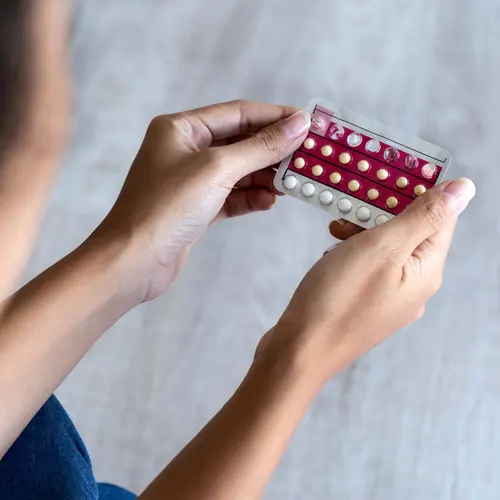
Birth control pills are contraceptives that use hormones to prevent a pregnancy.
There are many methods of birth control. You may hear this specific one referred to as just "the pill."
You take the pill by mouth to prevent pregnancy, and when it's taken correctly, it's up to 99.9% effective. But the pill doesn’t protect you from sexually transmitted diseases, including HIV. The latex condom used to cover a penis gives the best protection from most STDs.
Brands of birth control pills
Some common birth control brands are:
- Ethinylestradiol and norethindrone (Balziva, Brevicon, Briellyn, Gildagia, Modicon, Philith, Wera, Zenchent)
- Ethinylestradiol and norgestimate (Estarylla, Previfem, Sprintec)
- Drospirenone and ethinylestradiol (Ocella, Yasmin, Yaz, Zarah)
- Drospirenone, ethinylestradiol, and levomefolate (Beyaz, Safyral)
- Ethinylestradiol and norgestrel (Cryselle, Elinest, Ogestrel)
- Ethinylestradiol and levonorgestrel extended-cycle (Amethia Lo, Camrese Lo, Daysee)
- Ethinylestradiol and desogestrel (Azurette, Kariva, Mircette, Viorele)
- Ethinylestradiol and levonorgestrel (LoSeasonique)
- Ethinylestradiol and norethindrone (Alyacen 7/7/7, Aranelle, Cyclafem 7/7/7, Dasetta 7/7/7, Leena, Necon 7/7/7, Nortrel 7/7/7, Tri-Norinyl)
- Ethinylestradiol and levonorgestrel (Enpresse, Trivora)
- Ethinylestradiol and desogestrel (Caziant, Cyclessa, Velivet)
- Dienogest and estradiol (Natazia)
- Ethinylestradiol and levonorgestrel (Introvale)
- Ethinylestradiol and levonorgestrel extended-cycle (Amethia, Ashlyna, Jolessa, Quasense)
- Norethindrone (Camila, Deblitane, Emzahh, Errin, Heather, Jencycla, Nor-QD, Sharobel)
- Drospirenone (Slynd)
How Do Birth Control Pills Work?
You become pregnant when an egg released from your ovary (the organ that holds eggs) is fertilized by sperm. The fertilized egg attaches to the inside of your womb (your uterus), where it develops into a baby. Hormones in your body control the release of the egg from the ovary – called ovulation – and prepare your body to accept the fertilized egg.
Hormonal contraceptives (the pill, the patch, and the vaginal ring) all contain a small amount of estrogen and progestin hormones. These hormones inhibit your body's natural hormones to prevent pregnancy in a few ways. Hormonal contraceptives usually stop your body from ovulating. They also change the cervical mucus to make it difficult for the sperm to go through the cervix and find an egg. They can also prevent pregnancy by changing the lining of the womb so it's unlikely the fertilized egg will be implanted.
Different types of birth control pills are available. If you’re thinking about using one of them, here's what you should know to help you make a smart choice.
How Well Do Birth Control Pills Work?
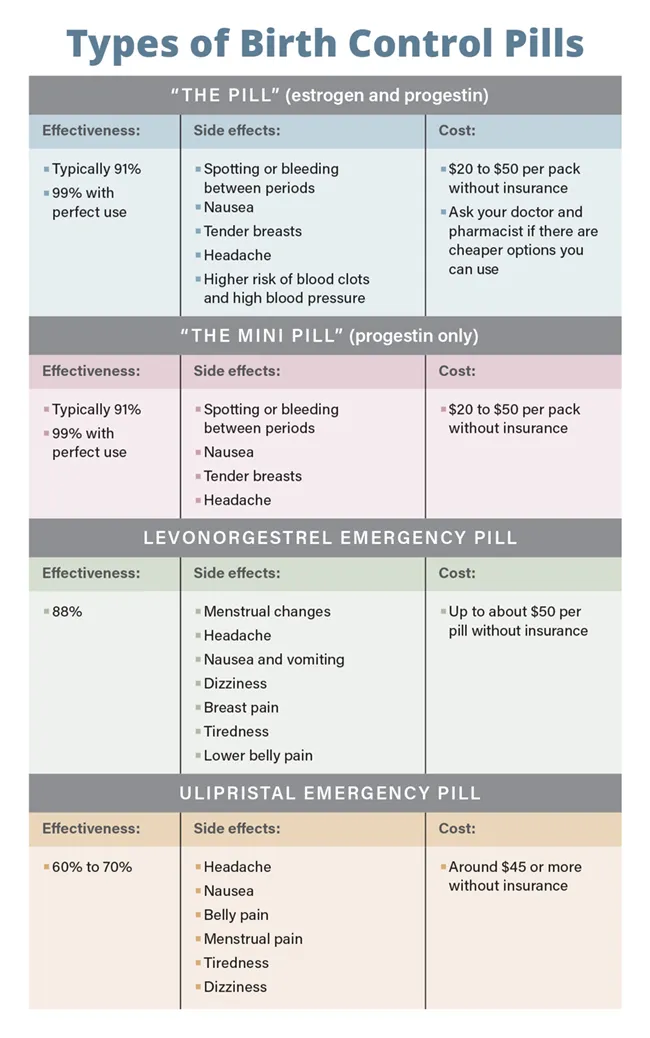
When taken exactly as prescribed, birth control pills are 99% effective at preventing pregnancy. But the pill becomes less effective if you don't take it at the same time every day, if you miss a dose by accident, or if you're taking other medications that interfere with it. Each year, around 9 out of 100 sexually active people get pregnant while taking birth control pills.
To make your birth control pill as effective as possible, take it consistently every day. If you miss a dose, take the missed pill as soon as you can, then take your next dose on your normal schedule. Talk with your health care provider about any other medications or supplements you're already taking to make sure they won't change how well your birth control works.
Types of Birth Control Pills
Oral contraceptive pills consist of either the hormones progestin and estrogen or only progestin, and they must be taken once per day in order to prevent pregnancy. There are three types on the market: the combination pill, the progestin-only pill, and the extended/continuous use pill.
What are combination pills?
Most people in the U.S. who are on the pill take what’s called the combination pill. Estrogen and progestin stop your ovaries from releasing eggs, and they make changes in your cervix and uterus that lower your chance of a pregnancy.
You have less than a 1% chance of getting pregnant if you use them exactly as directed. That means taking your pill every day. Their effects are easy to reverse, too. When you want to get pregnant, stop taking them. It’s possible to get pregnant right away.
Usually, if you miss two of these pills in a row, you’ll need to use backup birth control for a week.
Combo pills have benefits beyond birth control. They help regulate your period and lessen cramping. They can lower your risk of certain cancers. They might clear your acne. Two brands (Beyaz, Yaz) are approved to treat a severe form of premenstrual syndrome.
Most of them use between 20 and 35 micrograms of estrogen along with some progestin. Your doctor may start you on this level and then change it if side effects bother you.
Some pills have as little as 10 micrograms of estrogen. Low-dose pills may be a good option if you’re in perimenopause. They can help with symptoms like hot flashes or irregular periods.
Combination pills are either monophasic (one phase) or multiphasic (many phases).
Monophasic pills deliver an even level of hormones throughout the month. Multiphasic ones have slightly different levels of hormones in active pills. They mimic normal hormonal changes that happen during your menstrual cycle.
Both are equally effective at preventing a pregnancy.
What are extended-cycle pills?
The extended-cycle pill is a combination pill that reduces the number of menstrual periods from 13 periods a year to only four a year. That means someone who takes this pill will menstruate only once each season.
They use a combination of two hormones that are commonly used in other hormonal contraceptives. But the pill is taken continuously for 12 weeks, followed by 1 week of inactive pills, which results in a menstrual cycle.
What are minipills?
These are pills that contain only one hormone, progestin. They don’t have estrogen and may be prescribed for people who are breastfeeding or have nausea or other side effects of estrogen.
Minipills work by thickening the cervical mucus so the sperm can’t reach the egg. The hormone in the pills also changes the lining of the uterus so that implantation of a fertilized egg is much less likely. In some cases, minipills prevent the release of an egg. You take a minipill every day.
If minipills are used consistently and correctly, they are about 95% effective – somewhat less effective than standard birth control pills.
(Get more information about the birth control minipill.)
Emergency Contraceptive Pills
Emergency contraceptive pills, or morning-after pills, are a type of birth control that you take to prevent pregnancy after unprotected sex.
What are levonorgestrel and ulipristal?
People who have unprotected sex or who think their birth control method may have failed can use levonorgestrel or ulipristal, which are emergency birth control pills that work with or without hormones to prevent pregnancy.
Unlike the other pills, these aren’t intended for regular birth control. Levonorgestrel (Fallback Solo, Next Choice One Dose, Opcicon One-Step, Plan B One-Step) and ulipristal acetate (Ella) can greatly lower your chances of getting pregnant if you had unprotected sex or if you’re concerned that your usual birth control method didn’t work.
Levonorgestrel is about 88% effective if you use it as directed. You need to take it as soon as possible within 3 days of having sex.
Ulipristal is about 60% to 70% effective if you use it correctly. You need to take it ASAP within 5 days of having sex.
Where to Get Birth Control Pills
Most birth control pills are available only with a doctor's prescription.
Over-the-counter birth control pills
You can buy levonorgestrel over the counter (meaning without a prescription) at pharmacies and clinics.
Opill, a brand of norgestrel, is available over the counter. It's a progestin-only pill. You can get this pill at drugstores, convenience stores, grocery stores, or online.
Birth control pills online
You can also refill your prescriptions and order the pill online. Depending on where you have your prescription, you can pick up your prescription at a pharmacy or have it delivered to you.
How Much Do Birth Control Pills Cost?
Birth control pills can cost anywhere from $20 to $50 per pack. Over a year, this can add up to anywhere from $240 to $600.
See if your insurance covers your birth control pill. If they do, you might get it for no cost or a small fee.
Emergency birth control can cost anywhere from about $10 to $60, depending on the brand. See which stores have which brands to find the best option for you.
How to Take Birth Control Pills
Ask your doctor when you should start birth control pills. If you’re still having your period on the day you’ve been told to start your pill pack, start it anyway. You’ll get your next period about 25 days after starting the pill pack.
It's best to take the pills at the same time every day. You can take them at any time during the day, but taking it either before breakfast or at bedtime will help make it easier to remember.
Extended-cycle pills work in a similar way. You start taking the pill the first Sunday after your period starts. If your period starts on a Sunday, start it that day. You take one active tablet a day for 84 consecutive days. Then, depending on the type of pill you're taking, you have 7 days of taking one placebo or estrogen-only pill per day.
When Do Birth Control Pills Start Working?
When taken as directed, birth control pills are usually effective the first month you begin taking them. To be safe, some doctors recommend the use of another form of birth control, such as condoms and foam, during the first month. After the first month, you can just rely on the pill for birth control.
What if I Forget to Take a Birth Control Pill?
If you forget to take a birth control pill, take it as soon as you remember. If you don't remember until the next day, go ahead and take two pills that day. If you forget to take your pills for 2 days, take two pills the day you remember and two pills the next day. You will then be back on schedule. If you miss more than two pills, call your doctor. You may be told to take one pill daily until Sunday and then start a new pill pack, or to discard the rest of the pill pack and start over with a new pack that day.
Any time you forget to take a pill, you must use another form of birth control until you finish the pill pack. When you forget to take a pill, you increase the chance of releasing an egg from your ovary. If you miss your period and have forgotten to take one or more active pills, get a pregnancy test. If you miss two periods even though you have taken all your pills on schedule, you should get a pregnancy test.
With some pills, you may not have a period. Before you start taking your pills, talk with your doctor about what to expect, and follow their instructions about what to do if you don't have a period.
It is very important to take the minipills at the exact same time each day. If you miss a pill or are more than 3 hours late for a pill, you should take the pill as soon as you remember and use a backup method (such as a condom or spermicide) for the next 48 hours.
Birth Control Pill Side Effects
There are side effects of birth control pills, although most are not serious. Side effects include:
- Sore or swollen breasts
- Small amounts of blood, or spotting, between periods
- Lighter periods
- Mood changes
- A mild headache
Levonorgestrel can bring on side effects like:
- Menstrual changes
- Dizziness
- Breast pain
- Tiredness
- Lower belly pain
Ulipristal can bring on side effects like:
- A headache
- Nausea
- Belly pain
- Menstrual pain
- Tiredness
- Dizziness
The following side effects, easily remembered by the word "ACHES," are less common but more serious. If you have any of these, contact your doctor right away. If you can’t reach your doctor, go to an emergency room or urgent care center. These symptoms may be signals of a serious disorder, such as liver disease, gallbladder disease, a stroke, blood clots, high blood pressure, or heart disease:
- Abdominal pain (belly pain)
- Chest pain
- Headaches (severe)
- Eye problems (blurred vision)
- Swelling or aching in the legs and thighs
Birth control pills that have drospirenone, including Yasmin and Yaz, have been investigated by the FDA because of the chance that they could cause a higher risk of blood clots. Drospirenone is a human-made version of the hormone progesterone. Other brands with drospirenone include Beyaz, Gianvi, Loryna, Ocella, Safyral, Syeda, and Zarah.
The results of the investigation are inconsistent. Some studies showed a higher risk, but others didn’t. The drugs are still available. A summary of the findings is on the packaging label. If you’re taking a pill with drospirenone, talk with your doctor about your risk.
Long-term side effects of birth control pills
The pill is not linked with an overall increased risk of cancer. Its use is tied to a lower risk of colorectal, endometrial, and ovarian cancers. A higher risk of breast and cervical cancers has been seen in current and recent birth control pill users, but the risk went away within 5 years.
Other long-term side effects of birth control pills include:
Blood pressure changes. The birth control pill may slightly raise your blood pressure. Have your blood pressure taken regularly at your doctor appointments to ensure everything is normal. If you have issues with blood pressure changes, you can chat with your doctor to find a different type of birth control.
Blood clots. Combination birth control pills aren’t recommended if you have a history of blood clots, are at high risk of getting blood clots, or have venous thromboembolism (VTE). The estrogen in these can raise your risk of blood clots. The minipill or another type of progestin-only birth control is a better option. But progestin and progesterone can also heighten your risk of blood clots, just not as much as with pills that have estrogen.
Cholesterol changes. Birth control pills may impact your cholesterol levels. The type of pill and amount of estrogen and progestin it contains will affect how much your cholesterol changes. Birth control pills that have more estrogen might actually help your cholesterol levels a bit. But overall, the cholesterol changes from birth control pills aren’t huge and won’t usually affect your health.
Do birth control pills affect your fertility?
Long-term use of the pill shouldn’t affect your ability to get pregnant. Hormones from the birth control pill only stay in your body for a short amount of time. Once you stop taking the pill, your body will go back to its normal cycle. When this happens, you’ll be able to get pregnant. Your cycle usually takes a few months to return to normal.
Who Can Take Birth Control Pills?
Birth control is for anyone having penetrative, penis-to-vagina sex. This includes women, trans people, and nonbinary people.
Birth control pills can be taken safely by most people. They're not recommended, though, for those over age 35 who smoke. If you don't smoke, you can use hormonal contraceptives until menopause. You shouldn’t take hormonal contraceptives if you have had:
- Blood clots in the arms, legs, or lungs
- Cancer of the uterus
There are other conditions that may raise your level of risk associated with taking birth control pills. If you’re not sure if you’re affected by one of these conditions, ask your doctor. Also, tell them if you have a first-degree relative (parent, brother, sister, or child) who has had blood clots in the legs or lungs.
The pill may not be right for you if you:
- Have high blood pressure that isn’t well-controlled
- Are over 35 and smoke
- Have a history of stroke, heart disease, circulation problems, or breast cancer
- Started breastfeeding within the past month
- Have migraine headaches with aura
- Have diabetes-related complications like nephropathy, retinopathy, or neuropathy
- Recently had surgery
- Have liver disease
- Have unexplained uterine bleeding
Things to Keep in Mind When Taking Birth Control Pills
- Keep another form of birth control, like spermicidal foam and condoms, on hand in case you forget to take a pill.
- Carry your pills with you if you don't always sleep at the same place.
- Take your pill at the same time every day.
- Get your refills soon after you start the last prescription. Don't wait until the last minute.
- Birth control pills are medications. Always tell your doctor or pharmacist you are on the pill if you see them for any reason.
Birth Control Pill FAQs
What is continuous use with combination birth control pills?
With continuous birth control pill use, you take an active pill every day and never have a period. You might have breakthrough bleeding, especially at first. You may want fewer periods or none at all, especially if you have problem periods. But you may wonder how you’ll know if you get pregnant by accident.
If you think you could be pregnant, take a pregnancy test. They work even if you're taking the pill. If the test is positive, stop taking your pills and call your doctor.
Do I have to get permission from my parents to go on the pill if I’m younger than 18?
It depends where you live. In some states, you can get a prescription without permission. Ask your doctor or pharmacist about the laws in your area. A sex education counselor might be able to give you some ideas about how to bring up the subject with your parents. Even if you decide against that, they can talk to you privately if you’re confused, unsure, or just curious about sexual activity.
How old do I have to be to take the pill?
There’s no minimum age once you start to get your period, but some doctors suggest waiting until around 16 to give your body a chance to properly establish its cycle. It’s a good idea to talk to your doctor, parents, or a counselor to make sure you’re physically and mentally ready, both for the pill and for sex.
Will it make my cycle more regular?
In many cases, the pill will make your cycle more predictable. You’re more likely to get your period at the same time each month. Cramps and bleeding could be lighter, too. You might even miss a period now and then. But effects vary in part because the amount and type of hormones can differ, depending on the prescription. Talk to your doctor about the type that’s best for you.
Will the pill make me gain weight?
It’s unlikely. A review of more than 40 studies found no link between the pill and weight gain. That doesn’t mean the bathroom scale won’t tick up a little. And you might even feel a bit heavier around your thighs, hips, and breasts. But that’s probably a sign of water weight and bloating, not fat gain.
Will the pill make my breasts larger?
It can and often does, especially at first. Part of this is simply that the estrogen and progestin in the pills make you retain fluid, and it often collects in your breasts. But the hormones can also cause you to grow more breast tissue. This often goes away after a few cycles or after you go off the pill.
Does the pill help clear up acne?
It might, especially if you tend to break out during your period. Some birth control pills seem to slow overactive oil glands in your skin. Tell your doctor if you’re interested in this benefit. They might prescribe an extra drug called spironolactone that could work with the pill to help control your acne even better.
Does alcohol affect the way the pill works?
You’re no more likely to get pregnant from sex if you drink alcohol with the pill. But your decisions about having sex might not be as wise. Also, the pill can slow the amount of time it takes for alcohol to leave your body. If you drink too much, you could stay tipsy longer.
Is it OK to take other drugs while taking birth control pills?
Some drugs, including antibiotics and anti-seizure meds, can make birth control pills less effective. Some herbal supplements like St. John’s wort and some drugs used to treat HIV can also affect how well your pills work.
Tell your doctor about all medications, over-the-counter agents, herbs, and recreational drugs that you take. They can tell you about any possible effects on the pill.