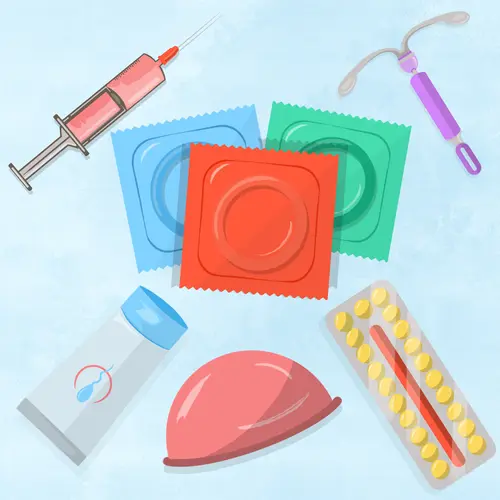
You have many options when it comes to choosing a form of birth control. Some may be better fits than others for your habits or lifestyle, but there’s always a central question: Which one does the best job of preventing pregnancy?
The effectiveness of some birth control methods depends in part on how carefully you use them. For example, if you take your birth control pill at exactly the same time every day and never miss (what experts call “perfect use”), your chance of pregnancy in a given year is about 1%.
However, most people don’t use their birth control perfectly every time. They may forget to use it sometimes or have trouble using it correctly. This is what experts call “typical use.” For people taking the pill, typical use means the chance of pregnancy is 9% in a given year.
Here’s how different forms of birth control stack up in their effectiveness, based on typical use.
Most Effective
Tubal Ligation: This surgery, what some people call getting your tubes tied, closes off the fallopian tubes, which stops an egg from traveling to the uterus so that sperm can’t reach it. It’s a very effective form of birth control. Your chances of getting pregnant are less than 1 in 100 after tubal ligation.
Vasectomy: This minor surgery cuts out a portion of the tubes (called the vas deferens) through which sperm travel to get out of the body. The result is that a man produces semen with no sperm during sex. The testes still make the sperm, which the body then absorbs. After a vasectomy, the odds of pregnancy are less than 1 in 100.
Implantable Rod: Once a doctor places the toothpick-sized rod (Nexplanon) under the skin of the upper arm, typically in the first 5 days of your period, you’re done. The device releases enough of the hormone progestin on a daily basis to prevent pregnancy for 3 years. It gives you a less than 1 in 100 chance of getting pregnant.
Copper IUD: An IUD, or intrauterine device, is a small T-shaped tool that stays inside the uterus. The copper kind (ParaGard) starts working immediately to protect against pregnancy. It’s 99% effective (less than 1 in 100 people who have one get pregnant per year) and changes little about the way your natural hormonal cycle works.
Hormonal IUD: Some IUDs (Kyleena, Liletta, Mirena, Skyla) have hormones, which they release in your uterus to help prevent pregnancy. It takes about 7 days after you get a hormonal IUD for it to start working. Less than 1 in 100 people per year get pregnant with this type of birth control. Your doctor can remove an IUD (copper or hormonal) at any time if you decide you want to get pregnant.
Effective
The Shot (Depo-Provera): Your doctor injects you with progestin hormones in the first 5 to 7 days of your normal period. You get one shot every 3 months. Perfect use for the shot means you get each new shot at exactly 13 weeks, which should give you a less than a 1 in 100 chance of getting pregnant in the next year. But, because some people wait longer than that to get another dose, typical use puts your risk of pregnancy in a given year at about 6 in 100.
The Pill: This combination of estrogen and progesterone doses is a common form of birth control. With typical use, about 9 in 100 people get pregnant in any given year. With perfect use (taking it at the same time every day), only 1 in 100 people will get pregnant in a given year. For the less common “minipill,” perfect use means you need to take it at close to exactly the same time (within an hour or so) every day.
The Patch: It’s a thin piece of clear material that sticks to your arm, shoulder blade, or lower belly and delivers a combination of estrogen and progesterone. You change it weekly. Typical use puts your risk of pregnancy in a given year at about 9 in 100. Perfect use, which lowers it to a 1 in 100 chance, means you change it at exactly the same time each week and make sure it doesn’t come loose or fall off.
Vaginal Ring: This ring-shaped device (NuvaRing) goes inside the vagina where it releases hormones (progestin and estrogen) that stop the ovaries from releasing eggs and so prevent pregnancy. The ring is designed to stay inside the body for 3 weeks before you change it. Your chance of pregnancy is about 9 in 100 for typical use.
Partly Effective
Barrier Methods: These options, including condoms, diaphragms (Koromex, Ortho-Diaphragm), sponges (Today Sponge), and cervical caps (FemCap), physically block sperm from getting to an egg. For some of these methods, you add spermicide, in the form of cream, gel, or foam, to further help stop the sperm. For the kinds that go inside the vagina, effectiveness varies -- 12-24 per 100 people get pregnant per year -- depending on which type you use, how you use it, and whether you’ve given birth before (for the sponge). For condoms that go over the penis, about 18 in 100 people will get pregnant in a given year. That’s because they can break or slip off during sex.
Withdrawal: This method means pulling the penis out of the vagina right before ejaculation. (It’s also known as “pulling out.”) It works to some extent, but not as well as other birth control methods. Part of the problem is that it may be tough to time ejaculation. Also, sperm can come out of the penis even before ejaculation. Around 22 in 100 people (1 in 5 couples) who use the withdrawal method will get pregnant in any given year.
Natural Family Planning: Sometimes called the “rhythm method,” this approach relies on you and your partner to figure out the days when you’re least likely to get pregnant. You avoid sex in the days right before and after ovulation, which usually happens around the same time each month. You can figure out if you’re ovulating by counting days from your period, measuring your body temperature, or checking the mucus from the cervix for signs of ovulation. About 24 in 100 (1 in 4) people who practice this method, will get pregnant in any given year.