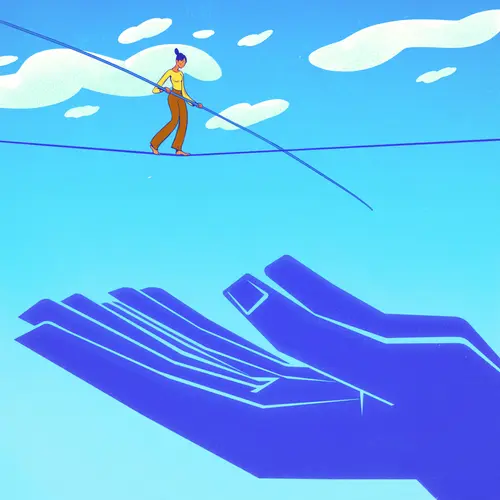
It's a classic tale, the story of Ebenezer Scrooge -- the epitome of selfishness, the quintessential mean-spirited, miserly, narcissistic old man. Yet as Scrooge discovers the joy of good deeds, he blooms with the "helper's high" - and his spirit is reborn. And a merrier man had never been seen, as the story goes.
In the last few years, researchers have looked at the so-called helper's high and its effects on the human body. Scientists are searching to understand just how altruism -- the wish to perform good deeds -- affects our health, even our longevity.
Acts of heroism are one form of altruism -- as we saw on 9/11, when firemen rushed into the World Trade Center. Many firemen, chaplains, and citizens joined the rescue and recovery effort, working grueling 12-hour shifts.
In everyday life, countless people choose to give up free time to volunteer -- whether it's serving at soup kitchens, cleaning up litter, taking elderly people to the grocery store, or helping a next-door neighbor.
What prompts a human being to act heroically? What makes us perform good deeds? When we act on behalf of other people, research shows that they feel greater comfort, less stress. But what about the do-gooder's physiology -- how is it affected? Can doing good make us healthier, as a growing number of scientists now believe? Can it even, as studies suggest, help us live longer?
This is the focus of 50 scientific studies funded through The Institute for Research on Unlimited Love, headed by Stephen G. Post, PhD, a professor of bioethics at Case Western Reserve University School of Medicine. It is a comprehensive investigation of altruism, aka benevolence, compassion, generosity, and kindness.
The Innate Need to Do Good
It's no surprise that, when we're on the receiving end of love, we reap a benefit. "There are ample studies showing that when people receive generosity and compassion, there is a positive effect on their health and well-being," Post tells WebMD.
Examples: "When a compassionate physician creates a safe haven for the ill patient, the patient experiences relief from stress," he explains. "One study showed that when men felt loved by their wives, they were less likely to experience chest pain that might signal a heart attack."
Only in recent years have researchers explored the scientific underpinnings of the notion that "doing good" is indeed a good thing -- and precisely why it is good for us. Indeed, many scientific disciplines -- evolution, genetics, human development, neurology, social science, and positive psychology -- are at the heart of this investigation, says Post.
Linking Kindness and Health
In a paper published earlier this year, Post describes the biological underpinnings of stress -- and how altruism can be the antidote. This connection was discovered inadvertently in 1956, when a team of Cornell University researchers began following 427 married women with children. They assumed that the housewives with more children would be under greater stress and die earlier than women with few children.
"Surprisingly, they found that numbers of children, education, class, and work status did not affect longevity," writes Post. After following these women for 30 years, researchers found that 52% of those who did not volunteer had experienced a major illness -- compared with 36% who did volunteer.
Two large studies found that older adults who volunteered reaped benefits in their health and well-being. Those who volunteered were living longer than nonvolunteers. Another large study found a 44% reduction in early death among those who volunteered a lot -- a greater effect than exercising four times a week, Post reports.
In the 1990s, one famous study examined personal essays written by nuns in the 1930s. Researchers found that nuns who expressed the most positive emotions were living about 10 years longer than those who expressed the fewest such emotions.
The Science of Altruism
When we engage in good deeds, we reduce our own stress -- including the physiological changes that occur when we're stressed. During this stress response, hormones like cortisol are released, and our heart and breathing rates increase -- the "fight or flight" response.
If this stress response remains "turned on" for an extended period, the immune and cardiovascular systems are adversely affected -- weakening the body's defenses, making it more susceptible to abnormal cellular changes, Post explains. These changes can ultimately lead to a downward spiral -- abnormal cellular changes that cause premature aging.
"Studies of telomeres -- the end-caps of our genes -- show that long-term stress can shorten those end-caps, and shortened end-caps are linked with early death," he tells WebMD. "These studies indicate that we're dealing with something that's extremely powerful. Ultimately, the process of cultivating a positive emotional state through pro-social behaviors -- being generous -- may lengthen your life."
Altruistic emotions -- the "helper's high" -- seem to gain dominance over the stress response, Post explains. The actual physiological responses of the helper's high have not yet been scientifically studied. However, a few small studies point to lowered stress response and improved immunity (higher levels of protective antibodies) when one is feeling empathy and love.
In one study, older adults who volunteered to give massage to infants had lowered stress hormones. In another study, students were simply asked to watch a film of Mother Teresa's work with the poor in Calcutta. They had significant increases in protective antibodies associated with improved immunity -- and antibody levels remained high for an hour afterward. Students who watched a more neutral film didn't have changes in antibody levels. "Thus, 'dwelling on love' strengthened the immune system," writes Post.
Compassion in the Brain
There's evidence in brain studies of a "compassion-altruism axis," Post tells WebMD. Utilizing functional MRI scans, scientists have identified specific regions of the brain that are very active during deeply empathic and compassionate emotions, he explains. A new mother's brain -- specifically, the prefrontal lobe -- becomes very active when she looks at a picture of her own baby, compared to other babies' pictures.
"This is extremely important," Post says. "This is the care-and-connection part of the brain. It is a very different part of the brain than is active with romantic love. These brain studies show this profound state of joy and delight that comes from giving to others. It doesn't come from any dry action -- where the act is out of duty in the narrowest sense, like writing a check for a good cause. It comes from working to cultivate a generous quality -- from interacting with people. There is the smile, the tone in the voice, the touch on the shoulder. We're talking about altruistic love."
Brain chemicals also enter into this picture of altruism. A recent study has identified high levels of the "bonding" hormone oxytocin in people who are very generous toward others. Oxytocin is the hormone best known for its role in preparing mothers for motherhood. Studies have also shown that this hormone helps both men and women establish trusting relationships.
The Evolution of Kindness
"Humans have evolved to be caring and helpful to those around us, largely to ensure our survival," says Post. "In Darwin's Descent of Man, he mentions survival of the fittest only twice. He mentions benevolence 99 times."
Humans are mammals, and like other mammals we are social animals. As we evolved, our social bonds helped ensure our survival, explains Harvard psychiatry associate professor Gregory L. Fricchione, MD. Fricchione is working on a book about brain evolution and the development of human altruism.
"If it is evolutionarily beneficial for human beings to benefit from social support, you would expect that evolution would provide the species with the capacity to provide social support," he tells WebMD. "This is where the human capacity for altruism may come from."
The Impact of Genetics and Environment
An interplay of our genetics and our environment - especially in our early years - will play into whether we develop into altruistic individuals. "It's a bit like the traits of shyness and extroversion; people are found at all parts of the spectrum. You would expect that some people would have the capacity to be more altruistic than others -- and some preliminary findings that suggest how this capacity may emerge," says Fricchione, who is also associate chief of psychiatry at Massachusetts General Hospital in Boston.
He's referring to a small study published recently, which looked at oxytocin levels in children's urine while they interacted with their parents. One group was composed of orphans who had spent the first 16 months of life in overseas orphanages - neglected before being adopted by U.S. families. The other group of kids had been raised in stable, caring homes during their earliest years.
The adopted orphans had produced lower levels of urinary oxytocin after being with their mothers, compared with children raised in nurturing homes since birth. "This may be a clue to a 'window of opportunity' in children's development, that those who grow up to be empathic, caring, and more altruistic in later life were nurtured more in their earlier years," Fricchione says. "That nurturing may help develop the altruistic capacity."
Future research might focus on whether the experience of being well cared for in early childhood could enhance the development of so-called "mirror neurons" that enable us to have empathic responses to the emotional states we witness in others, he says.
The Healing Hormone
Indeed, oxytocin may be connected to both physical and emotional well-being, says Fricchione. "Oxytocin is the mediator of what has been called the 'tend-mend' response, as opposed to the 'fight-flight' response to stress. When you're altruistic and touching people in a positive way, lending a helping hand, your oxytocin level goes up - and that relieves your own stress."
In one animal study, researchers looked at the numerous effects that oxytocin can produce in lab rats -- lower blood pressure, lower levels of stress hormones, and an overall calming effect.
Altruistic behavior may also trigger the brain's reward circuitry -- the 'feel-good' chemicals like dopamine and endorphins, and perhaps even a morphine-like chemical the body naturally produces, Fricchione explains. "If altruistic behavior plugs into that reward circuitry, it will have the potential to reduce the stress response. And if the altruistic behavior continues to be rewarding, it will be reinforced."
Again, Scrooge is a good example, says Post. "He comes alive because of his benevolent affections and emotions. What's really happening is that he's tapping into the whole neurology, endocrinology, and immunology of generosity.
"All the great spiritual traditions and the field of positive psychology are emphatic on this point -- that the best way to get rid of bitterness, anger, rage, jealousy is to do unto others in a positive way," Post tells WebMD. "It's as though you somehow have to cast out negative emotions that are clearly associated with stress -- cast them out with the help of positive emotions."