Human�/�Clinical Studies
No studies in the published peer-reviewed literature discuss aromatherapy as a treatment for people with cancer. The studies discussed below, most of which were conducted in patients with cancer, primarily focus on other health-related conditions and on quality of life measures such as stress and anxiety levels.
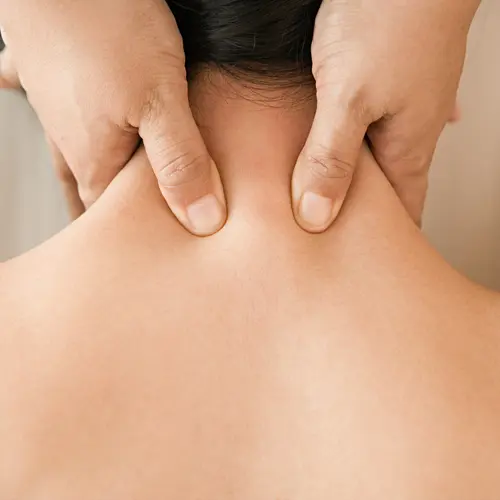
Among the fewest articles published on the subject are clinical trials involving aromatherapy. A major review published in 2000 [1] focused on six studies investigating treatment or prevention of anxiety with aromatherapy massage. Although the studies suggested that aromatherapy massage had a mild transient anxiolytic effect, the authors concluded that the research done at that time was not sufficiently rigorous or consistent to prove the effectiveness of aromatherapy in treating anxiety. This review excluded trials related to other effects of aromatherapy (such as pain control) and did not include any studies looking at the effects of odors that were not specifically labeled as aromatherapy.
General Information About Pheochromocytoma and Paraganglioma
Pheochromocytomas and extra-adrenal paragangliomas are rare tumors arising from neural crest tissue that develops into sympathetic and parasympathetic paraganglia throughout the body. Sympathetic paraganglia include the following: The adrenal medulla. The organ of Zuckerkandl near the aortic bifurcation. Other paraganglia along the distribution of the sympathetic nervous system. Parasympathetic paraganglia include the following: The carotid body. Other paraganglia along the...
Read the General Information About Pheochromocytoma and Paraganglioma article > >
Several of the studies included in the Cochrane Database of Systematic Reviews are discussed in more detail. A randomized controlled pilot study examined the effects of adjunctive aromatherapy massage on mood, quality of life, and physical symptoms in patients with cancer.[2] Forty-six patients were randomly assigned to conventional day care alone or day care plus weekly aromatherapy massage using a standardized blend of oils for 4 weeks. Patients self-rated their mood, quality of life, and the intensity of the two symptoms that were the most concerning to them at the beginning of the study and at weekly intervals thereafter. Of the 46 patients, only 11 of 23 (48%) in the aromatherapy group and 18 of 23 (78%) in the control group completed all of the 4 weeks. Patient-reported mood, symptoms, and quality of life improved in both groups, and there was no statistically significant difference between the two groups in any of these measures.
Another randomized controlled trial examined the effects of aromatherapy massage and massage alone on 42 patients with advanced cancer over a 4-week period.[3] Patients were randomly assigned to receive weekly massages with or without aromatherapy; the treatment group (aromatherapy group) received massages with lavender essential oil (Lavandula angustifolia Miller [synonyms: Lavandula spicata L.; Lavandula vera DC.]) and an inert carrier oil, and the control group (massage group) received either an inert carrier oil alone or no intervention. The authors reported no significant long-term benefits of aromatherapy or massage in pain control, quality of life, or anxiety, but sleep scores (as measured by the Verran and Snyder-Halpern sleep scale) improved significantly in both groups. The authors also reported statistically significant reductions in depression scores (as measured by the Hospital Anxiety and Depression Scale [HADS]) in the massage-only group.
A placebo-controlled, double-blind, randomized trial conducted in Australia investigated the effects of inhalation aromatherapy on anxiety during radiation therapy.[4] A total of 313 patients receiving radiation therapy were randomly assigned to one of three groups: carrier oil with fractionated oils, carrier oil only, or pure essential oils of lavender, bergamot (Citrus aurantium L. ssp. bergamia [Risso] Wright & Arn. [Rutaceae]; [synonym: Citrus bergamia Risso]), and cedarwood (Cedrus atlantica [Endl.] Manetti ex Carriere [Pinaceae]). All three groups received the oils by inhalation during their radiation therapy. The authors reported no significant differences in depression (as measured by HADS) or psychological effects (as measured by the Somatic and Psychological Health Report) between the groups. The group that received only the carrier oil showed a statistically significant decrease in anxiety (as measured by HADS) compared with the other two groups.
WebMD Public Information from the National Cancer Institute