What Is the Prostate?
The prostate is a gland in the male reproductive system. It makes most of the semen that carries sperm.
Where Is It Located?
It sits directly beneath your bladder and in front of your rectum. Because the first portion of the urethra passes through the prostate, the passage of urine or semen through the urethra can be blocked if the gland is enlarged.
What Is Prostate Cancer?
Prostate cancer is a malignant tumor of the prostate.
The disease is less common before age 50, and experts believe that most elderly men have traces of it.
African American men are more likely to get prostate cancer and have the highest death rate. Other than skin cancer, prostate cancer is the most common cancer in American men. In other parts of the world -- notably Asia, Africa, and Latin America -- prostate cancer is rare.
Prostate cancer is usually a very slow-growing cancer, often causing no symptoms until it is in an advanced stage. Most men with prostate cancer die of other causes and many never know that they have the disease. But once prostate cancer begins to grow quickly or spreads outside the prostate, it is dangerous.
Prostate cancer in its early stages (when it’s found only in the prostate gland) can be treated, with very good chances for survival. Fortunately, about 85% of American men with prostate cancer are diagnosed in an early stage of the disease.
Cancer that has spread beyond the prostate (such as to the bones, lymph nodes, and lungs) is not curable, but it may be controlled for many years. Because of the many advances in treatments, most men whose prostate cancer becomes widespread can expect to live 5 years or more. Some men with advanced prostate cancer live a normal life and die of another cause, such as heart disease.
What Causes Prostate Cancer?
Prostate cancer affects mainly older men. About 80% of cases are in men over 65, and less than 1% of cases are in men under 50. African American men and those with a family history of prostate cancer are more likely to get it.
Doctors don’t know what causes prostate cancer, but diet contributes to the risk. Men who eat lots of fat from red meat are most likely to have prostate cancer. Eating meat may be risky for other reasons: Meat cooked at high temperatures produces cancer-causing substances that affect the prostate. The disease is much more common in countries where meat and dairy products are common than in countries where the diet consists of rice, soybean products, and vegetables.
Hormones also play a role. Eating fats raises the amount of testosterone in the body, and testosterone speeds the growth of prostate cancer.
A few job hazards have been found. Welders, battery manufacturers, rubber workers, and workers frequently exposed to the metal cadmium seem to be more likely to get prostate cancer.
Not exercising also makes prostate cancer more likely.
Drugs that may lower the risk of prostate cancer include aspirin, finasteride (Proscar), and dutasteride (Avodart).
Can Prostate Cancer Be Prevented?
There’s no evidence that you can prevent prostate cancer. But a few simple things may help lower your odds.
Healthy food
A diet that helps you stay at a healthy weight may cut your chances of having prostate cancer. These steps can help:
- Choose whole-grain breads, pasta, and cereals over refined grain products.
- Cut back on red meats, especially processed meats such as hot dogs, bologna, and certain lunch meats.
- Eat at least 2 1/2 cups of fruits and vegetables each day.
Antioxidants in foods, especially in fruits and vegetables, help prevent damage to the DNA in your cells. Such damage has been linked to cancer. Lycopene, in particular, is an antioxidant that has been thought to lower the risk of prostate cancer. It can be found in foods such as:
- Tomatoes, both raw and cooked
- Pink and red grapefruit
- Watermelon
- Guava
- Papaya
Frequent ejaculation
Whether it’s from sex, masturbation, or wet dreams, men who ejaculate more appear to be less likely to get prostate cancer. Doctors aren’t sure why it helps, but they think it may help move potentially irritating substances out of the prostate.
What Are the Symptoms of Prostate Cancer?
Symptoms of prostate cancer include:
How Do I Know If I Have Prostate Cancer?
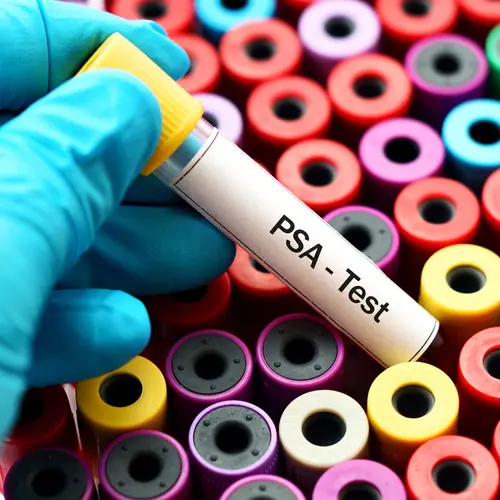
Doctors use two tests to look for prostate cancer: a digital rectal exam and a PSA blood test.
The PSA blood test looks for prostate-specific antigen in the blood. Experts are divided on who should have a PSA test and when to have it:
- The U.S. Preventive Services Task Force recommends that for men aged 55 to 69, the decision to have PSA testing should be an individual one based on a conversation about risks and benefits with their doctor.
- The American Cancer Society recommends a discussion between the doctor and patient about the pros and cons of PSA tests. Men shouldn't get the test unless their doctor has given them this information, the group says. It also recommends that the discussion start at age 50 for most men at average risk for prostate cancer, or ages 40 to 45 for those at high risk of prostate cancer.
- The American Urological Association also recommends that men talk with their doctor about the pros and cons of the PSA test. That discussion should typically take place between the ages of 55 and 69. For those at higher risk for prostate cancer, the discussion can take place as early as ages 40 to 54.
PSA levels in blood are higher if there is prostate cancer, making it a valuable tool in finding early prostate cancer. But PSA levels can also be high from infection or inflammation in the prostate or from an enlarged prostate.
It’s important to discuss this test with your doctor before you have it. A high PSA level does not mean you have cancer; a normal PSA level does not mean you don't have cancer.
If PSA levels are high or have gone up since your last PSA test, your doctor will do a biopsy of the prostate gland using a small ultrasound probe inserted in the rectum (transrectal ultrasound). Tissue samples will be tested for cancer.
If cancer is found, the doctor may do abdominal and pelvic X-rays to see if the cancer has spread outside the prostate. You may also have an MRI and a bone scan.
If you have high PSA levels but biopsies don’t find cancer, a urine test known as a PCA-3 looks for cancer. This can prevent the need for repeat biopsies in some men.
What Are the Treatments for Prostate Cancer?
If you need treatment, your doctor will decide the type. Decisions about how to treat this cancer are complex, and you may want a second opinion before making a treatment decision. Treatment may include watchful waiting, a single therapy, or some combination of radiation, surgery, hormone therapy, and less commonly chemotherapy. The choice depends on many things. Prostate cancer that hasn’t spread usually can be cured with surgery or radiation.
Watchful waiting
Since prostate cancer can grow slowly and may not be fatal in many men, some patients -- after discussing the options with their doctors -- opt for "watchful waiting." This means not treating it. Instead, the doctor regularly checks the prostate cancer for signs that it is becoming more aggressive. Watchful waiting is typically recommended for men who are older or have other life-threatening conditions. In these cases, a less aggressive cancer may be growing so slowly that it's not likely to be fatal.
Surgery
The standard operation, a radical retropubic prostatectomy, removes the prostate and nearby lymph nodes. In most cases, surgeons can remove the gland without cutting nerves that control erections or the bladder, making impotence or incontinence much less common than in the past. Depending on the man's age and the amount of surgery needed to remove all the cancer, nerve-sparing operations allow many men who were able to get erections before surgery to be able to do so after surgery without the need for erectile dysfunction treatments.
Laparoscopic robotic prostatectomy is a surgery using a laparoscope aided by robotic arms. This operation is now the most popular form of radical prostatectomy in the United States.
After surgery, most men have temporary incontinence, but they usually regain complete urinary control over time. If it is severe or lasts a long time, incontinence can be managed with special disposable underwear, exercises, condom catheters, biofeedback, penile clamps, implants around the urethra, or a urethral sling.
After surgery or radiation, men may have impotence. Treatment includes drugs such as sildenafil (Revatio, Viagra), tadalafil (Adcirca, Cialis), and vardenafil (Levitra, Staxyn). Other treatments include teaching the man to perform a painless self-injection into the penis (of a drug called Caverject), or vacuum pumps. A penile prosthesis is used only when all other options have failed.
Radiation
Radiation is often the main treatment for prostate cancer that has not spread. It may also be given as follow-up to surgery. Radiation may also be used, in advanced cases, to relieve pain from the spread of cancer to bones. Incontinence and impotence may also happen after radiation. Radiation to the pelvis may also be done if PSA levels rise after surgery.
An advanced form called intensity modulated radiation therapy (IMRT) can increase the dose of radiation to the prostate with fewer side effects to the nearby tissues. Proton beam therapy can increase the dose to the prostate even more. But proton therapy has not been found to be better than IMRT. A more focused form of radiation, stereotactic radiation, is being used for early forms of prostate cancer. This treatment also has not been shown to improve the outcome of prostate cancer. Though it may take less time than IMRT, it may have more side effects.
Radioactive seeds (brachytherapy) deliver radiation to the prostate with little damage to nearby tissues. Your doctor implants the tiny radioactive seeds, each like a grain of rice, in the prostate gland using ultrasound guidance. The implants remain in place permanently and become inactive after many months. In some patients, this method may be used with traditional radiation. Or, if the prostate gland is too large for brachytherapy, hormone therapy can shrink the prostate to allow brachytherapy to be done.
Hormone therapy
Hormone therapy is the recommended treatment for advanced prostate cancer. Since testosterone can make prostate cancer grow, hormone therapy works by tricking the body to stop making testosterone, stopping or slowing the cancer's growth. The following drugs decrease the amount of testosterone being made by the testicles:
Even advanced cases that cannot be cured may be controlled for many years with hormone therapy. But there is a higher risk of heart disease with this treatment. Fractures are also a risk because of thinning bone. Medications can reduce the risk of osteoporosis and fractures.
Testosterone can also be removed from the bloodstream by surgically removing the testicles (orchiectomy) or by giving female hormones such as estrogen or other drugs that block testosterone production. Estrogen therapy is no longer used routinely. Men generally prefer the testosterone-blocking drug treatment because it is effective, is less invasive, and causes fewer side effects than surgery or female hormone drugs.
Other treatments
Chemotherapy is effective for some men with advanced prostate cancer who didn’t do well on or respond to hormone therapy. When traditional hormonal treatments stop working, newer hormonal therapies may be considered.
Abiraterone (Zytiga) blocks tissues from making testosterone. Apalutamide (Erleada) and enzalutamide (Xtandi) prevent cancer cells from getting the signal to grow and divide.
Darolutamide (Nubeqa) has been approved to treat those whose cancer has not spread to other parts of the body but has not responded to surgical treatment or standard androgen deprivation therapy (it's used for prostate cancer in men with castrate testosterone levels whose PSA levels continue to rise). This is also known as nonmetastatic castration resistant prostate cancer (nmCRPC).
Biological therapy (immunotherapy) is a treatment that works with your body’s immune system to fight cancer or manage side effects from other treatments.
High-intensity focused ultrasound (HIFU) uses high-energy sound waves to kill prostate tissue. But it’s not approved to treat prostate cancer itself. Research is ongoing to see how it works.
The goal of prostate cancer treatment is long-term survival, and that is likelier in men diagnosed early. All prostate cancer survivors should be examined regularly and have their PSA and testosterone levels monitored closely.
What's the Outlook?
Although the number of men diagnosed with prostate cancer remains high, so does the number of men who get it and live. Survival rates after diagnosis of common types of prostate cancer are:
- 5 years: nearly 99%
- 10 years: 98%
- 15 or more years: 96%