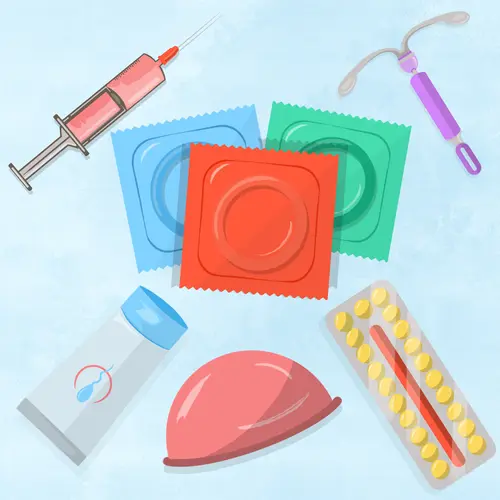
Women have been using the diaphragm for birth control in one form or another for hundreds of years. It’s a small, flexible cup made of silicone or latex that goes inside the vagina to block sperm from reaching an egg. It has very few risks and can be up to 94% effective. Here’s how to decide if it’s right for you.
How do you use a diaphragm?
You need to use a diaphragm along with a cream or gel that kills sperm, called a spermicide.
First squeeze about a tablespoon of spermicide inside the cup of the diaphragm and spread more around the rim. To put it in:
- Get in a comfortable position with your legs open and knees bent.
- Fold the diaphragm in half, with your index finger inside to help guide it.
- With your other hand, open your labia, then push the diaphragm as far up and back inside your vagina as it will go.
- The diaphragm should cover the narrow opening to your uterus, called the cervix, and the front edge should tuck behind your pubic bone.
You can put it in up to 6 hours before you have sex, and you need to leave it in for at least 6 hours after.
Once it’s in place, you can have sex more than once, but you need to reapply spermicide before each time. Do that with your fingers or an applicator, making sure to get it deep inside your vagina. Most spermicides only work if you use them less than an hour before you have sex. So if you put the diaphragm in hours ahead of time, remember to add more.
You can leave the diaphragm in for up to 24 hours. To remove it:
- Hook your finger over the rim and pull it down and out. If you have trouble, ask your doctor about a special tool that can help.
- Clean the diaphragm with soap and water, let it air dry, and store it in its case. Avoid oil-based lubricants, which can damage silicone. Check it every so often for holes or cracks.
How well do they work?
How well a diaphragm prevents pregnancy depends a lot on whether you use it correctly. Six out of 100 women will get pregnant with the diaphragm if they use it perfectly every time. Most people make mistakes sometimes, so the typical rate is more like 12 to 18 out of 100. That’s more effective than condoms or other barrier methods, but less effective than sterilization, intrauterine devices (IUDs), or birth control pills.
There are some risks that come with a diaphragm. The most serious one is toxic shock syndrome, a condition you get from a bacterial infection. You can avoid it by not leaving a diaphragm in for more than 24 hours. The device also can cause irritation or a reaction if you’re allergic to latex. And some women get urinary tract infections more often when they use a diaphragm.
Where do you get a diaphragm?
You need a prescription to get one, so see your doctor or other health care professional. A traditional diaphragm requires fitting; the Caya, a newer type, is a one-size-fits-most (but is less reliable for preventing pregnancy).
The diaphragm isn't for everyone: you can’t use it if you have poor pelvic muscle tone or problems with the shape of your vagina.
You’ll have to replace it at least every 2 years or more often if your diaphragm gets damaged. You may need a different size if you get pregnant, have pelvic surgery, or gain or lose more than 15 pounds.
What are the pros?
- You can choose to use a diaphragm, even if your partner doesn’t want to use a condom.
- If it’s in correctly, you and your partner can’t feel it.
- If you want to try to get pregnant, just stop using it.
- It doesn’t affect your body’s natural hormones.
- You can use it while you’re breastfeeding.
- Since you can put it in and apply spermicide an hour before you have sex, you don’t have to interrupt the mood.
What are the cons?
- The diaphragm doesn’t protect against STDs.
- You have to remember to reapply spermicide every time you have sex.
- It can be tough and messy to put one in.
- You can use it during your period, but it may put you at higher risk for an infection if it isn't removed soon after sex.
- You might knock it out of place during sex.
- You have to see a doctor to get one.
Is the diaphragm right for you?
The diaphragm may be a good choice for birth control if you want to avoid hormones and if you want something that you can easily reverse if you want to get pregnant. But you have to be able to use and take care of it properly and be at low risk for STDs.