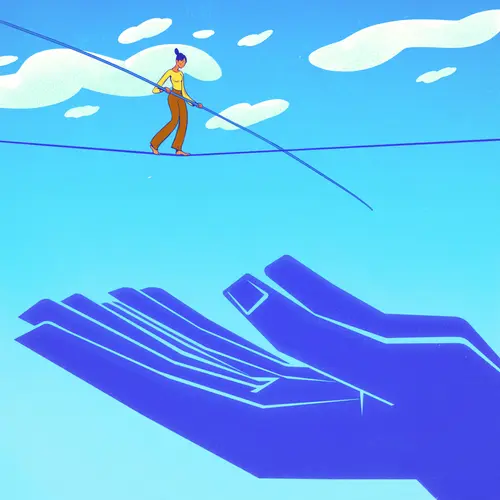
Watching the final leg of the presidential campaign, you might wonder how the candidates manage without infusions of DNA from Road Runner or the Energizer Bunny. With superhuman speed, President George W. Bush and Sen. John Kerry race across the country in endless loops - stumping in Ohio, Pennsylvania, Florida, back to Ohio. At rally after rally, they define themselves, defend themselves, and suffer ridicule for the slightest misstep. All the while, one of them is also responsible for running the country. How can anyone cope with so much stress?
"They don't see it as stress," says psychologist Oakley Ray, PhD. "They see it as a challenge." Ray, a professor emeritus of psychology, psychiatry, and pharmacology at Vanderbilt University, tells WebMD that stress is a product of the brain, not the environment. That is why some people thrive under circumstances that others find overwhelming.
"The kinds of people who are willing to go on the campaign trail know very much what they're getting into," Ray says. "They are actually searching it out. They want the attention that will be focused on them. They want the opportunity to have an impact on the direction of the campaign and the country."
The Power of Applause
Steven Berglas, PhD, agrees that politicians crave the thrill of the campaign trail. "They are wired differently. They are addicted to the power rush," says Berglas, a clinical psychologist and instructor at UCLA's Anderson School of Management. The reason the presidential candidates seem to have superhuman stamina, he says, is that every campaign stop offers a five-course meal for the ego. "They are on an adrenaline high. They can live on a Twinkie and applause for five months."
Berglas, who is also the author of Reclaiming the Fire: How Successful People Overcome Burnout, says the candidates do feel stress -- but in a good way. He distinguishes between negative stress, called distress, and positive stress, known by psychologists as eustress. While the former is associated with anxiety or exhaustion, the latter can promote growth and motivate people to work toward their goals.
"Politicians can seemingly do Herculean amounts of work because of the eustress associated with challenges," Berglas tells WebMD. "For a campaigner, the opportunity to win over an audience, gain approval, see your numbers increase in the polls -- that is the best feeling in the world."
The Power of a Cause
But what about all of those staffers who travel with the candidates and put in even longer hours, but never see their own names on banners and placards?
"Campaign managers get a lesser high from knowing they are indispensable," Berglas says.
It's the rank-and-file staffers who are most vulnerable to stress. They experience all the hassles -- long hours, sleep deprivation, being away from friends and family -- without the exhilaration of fans cheering them on at every turn. The secret to their endurance is usually ideology. According to Ray, "Believing in the fight makes them immune to the stress."
When Good Stress Goes Bad
If the hassles of campaigning begin to outweigh the rewards, what was once positive stress may become distress. According to the American Psychological Association, even brief exposure to this type of stress can trigger a wide range of symptoms, including:
- Emotional distress:
- Anger or irritability
- Anxiety
- Depression
- Stomach and bowel problems:
- Heartburn
- Acid stomach
- Diarrhea or constipation
- Irritable bowel syndrome
- Recurring "fight or flight" response:
- Temporary elevation in blood pressure
- Rapid heartbeat
- Chest pain
- Dizziness
- Shortness of breath
- Sweaty palms
Prolonged exposure to stress day after day, year after year, can take a devastating toll on psychological and physical well-being. In fact, stress is linked to six of the leading causes of death -- heart disease, cancer, lung ailments, accidents, liver disease, and suicide. To improve both life expectancy and quality of life, psychologists emphasize the importance of stress management.
Taking Out the Garbage
Just as taking out the garbage is essential to keeping an orderly home, Berglas recommends "emptying your mind" for 15 to 30 minutes every day.
While Kerry may prefer to unwind by windsurfing and Bush by clearing brush on his ranch, Berglas says any activity that blocks mental chatter and generates stress-busting endorphins will do. "Slap on a headset and run, go out at night and look for the Big Dipper, listen to music, watch a fish tank. ... It's like flushing the toilet of your mind."
Endorphins are powerful brain chemicals that relieve pain and promote a sense of well-being. While pleasurable activities such as jogging or stargazing -- or campaigning, if you're a politico - can generate endorphins, thought patterns play a role as well. A candidate who dwells on discouraging poll numbers or bad publicity is likely to have lower endorphin levels and a greater vulnerability to stress.
"In order to get into politics, you have to be able to discount the negative things that are said about you," Ray tells WebMD. "John Kerry is not bleeding because of what Bush and [Vice President Dick] Cheney say about him, or vice versa."
And the Winner Is ...
Once the campaign ends, one candidate will have to cope with the stress of losing, the other with the stress of running the country. In either case, the thrill of the campaign trail is gone and "the narcissistic highs are no longer available," Berglas says.
But which is more stressful -- winning or losing? "Over the long haul, winning is more stressful because of the ever-increasing challenges," Ray says.
Ray predicts the losing candidate will overcome any sense of failure by using the same logic as a rejected suitor. "He'll say, 'Why? I'm a good-looking guy. I'm intelligent. I dress reasonably well. Obviously, it's not me -- it's her.'" Or in this case, "It's not me -- it's the voters."