
What Is Meningitis?
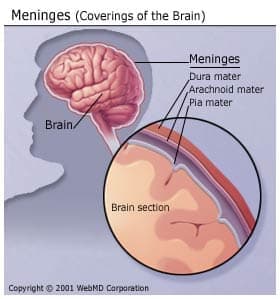
Meningitis is a rare infection that affects the delicate membranes -- called meninges -- that cover the brain and spinal cord. You or your children can catch it.
Meningitis vs. encephalitis
These two conditions are similar, and many symptoms overlap. While meningitis affects the covering of the brain and spinal cord, encephalitis affects the tissue of the brain itself.
Types of Meningitis
Bacterial meningitis
This is an extremely serious illness. You or your child will need to get medical help right away. It can be life-threatening or lead to brain damage unless you get quick treatment.
Several kinds of bacteria can cause bacterial meningitis. The most common ones in the U.S. are:
- Streptococcus pneumoniae (pneumococcus)
- Neisseria meningitidis (meningococcus)
- Listeria monocytogenes (in older people, pregnant women, or those with immune system problems)
A bacteria called Haemophilus influenzae type b (Hib) was a common cause of meningitis in babies and young children until the Hib vaccine became available for infants. There are also vaccines for Neisseria meningitidis and Streptococcus pneumoniae. Experts recommend that all children get them, as well as all adults who are at a higher risk for the disease.
In many cases, bacterial meningitis starts when bacteria get into your bloodstream from your sinuses, ears, or throat. The bacteria travel through your bloodstream to your brain.
The bacteria that cause meningitis can spread when people who are infected cough or sneeze. If you or your child has been around someone who has bacterial meningitis, ask your doctor what steps you should take to avoid catching it.
Viral meningitis
Viral meningitis is more common than the bacterial form and generally less serious, but this isn't always the case. Several viruses can trigger the disease. Among them are:
- Non-polio enteroviruses, including the one that causes hand, foot, and mouth disease
- Herpes simplex virus
- Varicella zoster, which also causes chickenpox and shingles
- Mumps virus
- Measles virus
- Arboviruses such as West Nile and Zika
- Epstein-Barr, which also causes mononucleosis
- HIV
- Flu viruses
- Lymphocytic choriomeningitis virus
Fungal meningitis
Fungal meningitis is much less common than the bacterial or viral forms. Healthy people rarely get it. You’re more likely to get this form of meningitis if you have a problem with your immune system, such as AIDS. Among the fungi that cause it are:
- Cryptococcus, which is common everywhere in the world.
- Histoplasma, which is especially common in soil with lots of bird or bat poop. In the U.S., it's found mostly in eastern and central states.
- Blastomyces, which thrives in wet soil and decaying leaves. In the U.S., it's found mostly in midwestern, south-central, and southeastern states.
- Coccidioides, which is found in the soil in the southwestern U.S., Mexico, Central and South America, and some parts of Washington state.
Parasitic meningitis
Parasitic meningitis is also rare. It’s caused by parasites that usually affect animals. You can get it from eating animals such as snails, slugs, snakes, fish, or poultry that are infected by parasites or their eggs, or produce that contains parasite eggs. The risk is higher with raw or undercooked foods. You can’t pass on this type of meningitis to other people. One especially rare type of this is called eosinophilic meningitis, and it's linked to three specific parasites:
- Angiostrongylus cantonensis, also known as rat lungworm, is found in Southeast Asia, Pacific islands, the Caribbean, and Africa.
- Baylisascaris procyonis is a type of roundworm that affects raccoons. It can also infect other small animals, including dogs.
- Gnathostoma spinigerum is a parasitic worm found mostly in Asia, South and Central America, and some parts of Africa.
Amoebic meningitis
Amoebic meningitis is a rare but usually fatal infection by a single-celled bug called Naegleria fowleri. This amoeba lives in soil or warm, fresh water, but not salt water. People typically get it from swimming in water where the amoeba lives, not by drinking it. Amoebic meningitis isn’t contagious.
Noninfectious meningitis
Noninfectious meningitis is caused by diseases such as lupus or cancer, or it may happen if you’ve had a head injury, brain surgery, or take certain medications. It isn’t contagious.
Chronic meningitis
Chronic meningitis has similar symptoms as acute meningitis but develops over a couple of weeks. It results from infections with a fungus or the mycobacteria that cause tuberculosis. These organisms get into the tissue and fluid surrounding your brain to cause meningitis.
Aseptic meningitis is a term doctors use when they can't find signs of bacteria in fluid from your brain and spine. That might mean your meningitis has another cause, such as a virus, or it might mean the bacteria making you sick is hard to grow in lab conditions.
Meningitis Symptoms
Meningitis symptoms can develop within hours or days. The condition may look different in adults than it does in babies or children. Signs to watch for include:
- Confusion
- Fever
- Headache
- Numbness in your face
- Sensitivity to light
- Stiff neck so that you can’t lower your chin to your chest
- Upset stomach or vomiting
- Severe headache with nausea or vomiting
- A hard time concentrating
- Seizures
- Sleepiness or a hard time waking up
- Lack of appetite
- Lack of thirst
What's the first sign of meningitis?
In the early stages of meningitis, you might feel like you have the flu.
Meningitis in babies
In infants, meningitis symptoms may include:
- High fever
- Crying that’s constant and gets louder when you hold the baby
- Baby seems overly sleepy, sluggish, or inactive
- Stiff neck or body
- Bulge on the soft area on the top of the baby’s head
- Poor ability to feed
- Crankiness
Meningitis in children
The symptoms of meningitis in children older than 2 are the same as they are in adults.
Meningitis rash
Meningococcal bacteria is the main cause of the signature meningitis rash. As the bacteria spread through your body, they damage blood vessels. The vessels start to leak blood, which pools into surrounding tissue and becomes visible on your skin.
It may start as what's called a "petechial" rash, which looks like small, red pinpricks on your skin. You may find them in spots where clothes put pressure on the skin – the waistband, for instance.
A "purpuric" rash looks like splotches of red or purple, more like bruising. A petechial rash can progress to this stage.
It can be tough to spot the rash on darker skin. Check paler areas of the body, such as the palms of the hands, soles of the feet, tummy, roof of the mouth, and insides of eyelids.
If you roll a clear drinking glass over the rash, it might disappear. If it does, it's a "blanching" rash. If it doesn't go away, it's a "non-blanching" rash. A meningitis rash may start as blanching but almost always will progress to non-blanching.
You can have meningitis without developing the rash. But the rash is a sign of serious illness, and anyone with it needs immediate medical help.
Risk Factors for Meningitis
Anyone can get meningitis, but research shows that it's more common in these age groups:
- Children under 5
- Teenagers and young adults aged 16-25
- Adults older than 55
Meningitis is more of a danger for people with certain medical conditions, such as a damaged or missing spleen, long-term disease, or immune system disorders.
Because certain germs that cause meningitis can spread easily, outbreaks are most likely to happen in places where people live close to each other. College students in dorms or military recruits in barracks can be more likely to catch the disease. So are people who travel to areas where meningitis is more common, such as parts of Africa.
Meningitis and Pregnancy
One type of germ that causes bacterial meningitis is listeria. If you're pregnant, you're 13 times more susceptible than the general population to infection by this bacteria. It can contaminate:
- Hot dogs
- Lunch meat
- Paté and other meat spreads
- Smoked seafood
- Unwashed raw fruits and vegetables
- Unpasteurized milk
- Unpasteurized soft cheeses, including feta, queso blanco, queso fresco, Brie, queso panela, Camembert, and blue-veined cheeses
A listeria infection can lead to meningitis. During pregnancy, it can cause early labor or may be fatal to your baby. That's why doctors recommend avoiding foods most often affected by listeria when you're pregnant.
Meningitis Causes
Meningitis almost always results from a bacterial or viral infection that begins somewhere else in your body, such as your ears, sinuses, or throat.
Less common causes of meningitis include:
- Autoimmune disorders
- Cancer medications
- Syphilis
- Tuberculosis
Is meningitis contagious?
Meningitis isn't contagious. But some of the things that cause it are. Many things that cause bacterial and viral meningitis can be spread to other people.
Meningitis Diagnosis
Your doctor will ask about your medical history and do a physical exam, including checking your neck for stiffness and looking for a skin rash that might suggest a bacterial infection.
Meningitis tests
If your doctor suspects meningitis, you'll need tests to confirm the diagnosis. They might include:
- Blood tests to find bacteria
- CT or MRI scans of your head to find swelling or inflammation
- Spinal tap, in which a health care worker uses a needle to take fluid from around your spinal cord. It can tell what’s causing your meningitis.
Treatment for Meningitis
Your treatment will depend on the type of meningitis you have.
Bacterial meningitis needs treatment with antibiotics right away. The doctor might give you a general or broad-spectrum antibiotic even before they’ve found the exact bacteria that caused your illness. Once they do, they’ll change to a drug that targets the specific bacteria they find with the spinal tap. You might also get corticosteroids to ease inflammation.
Viral meningitis usually goes away on its own without treatment. Your doctor might tell you to stay in bed, drink plenty of fluids, and take over-the-counter pain medicines if you have a fever or aches. If a virus such as herpes or influenza caused your illness, you might take antiviral medication.
Antifungal medications can treat fungal meningitis. You might need to spend time in the hospital if you're dehydrated or have severe symptoms.
Complications of Meningitis
Meningitis can cause severe complications in adults and children, especially if you delay treatment. Possible complications include:
Prevention of Meningitis
You may be able to prevent meningitis by avoiding infection with the viruses or bacteria that cause it. These infections are passed to others when you cough, sneeze, kiss, or share toothbrushes , or eating utensils. Take these steps to prevent infections:
- Wash your hands often. Rinse well. Also, teach your kids to wash their hands often, especially after eating, using the toilet, or when they’re in public places.
- Don’t share items such as toothbrushes, eating utensils, or lipstick.
- Don’t share food items or drinks with other people.
- Cover your mouth and nose when you cough or sneeze.
- Stay healthy. Eat a healthy diet, get plenty of exercise, and rest at night.
- If you’re pregnant, eat well-cooked food.Avoid foods made from unpasteurized milk and raw or undercooked meats, fish, and eggs.
- Get immunized. Follow your doctor’s advice on getting immunization shots for diseases that may cause meningitis, including flu and pneumonia vaccines.
Meningitis Vaccines
Some vaccines can help protect you from meningococcal illness, which is caused by bacteria.
- MenACWY vaccine, which the CDC recommends for all teens and preteens. One dose is given at the age of 11 or 12, followed by a booster at age 16. It's also recommended for adults at high risk.
- MenB vaccine is recommended for children 10 and older who are at increased risk
- MenABCWY vaccine is a combination of MenACWY and MenB. If you're planning to get the other two at the same time, you can get this vaccine instead.
The pneumococcal and Hib vaccines protect against bacteria that can cause bacterial meningitis. The Bacille Calmette-Guerin vaccine protects you against tuberculosis, which can cause meningitis. But it isn't used much in the U.S.
Takeaways
When you have meningitis, the protective layers around your brain and spinal cord (meninges) become inflamed. Most cases are caused by viruses, but other causes include bacteria, fungi, parasites, or amoeba. Common symptoms include a stiff neck, headache, fever, nausea, and vomiting. If you think you might have meningitis, get immediate medical help. If you have bacterial meningitis, your symptoms could get worse rapidly.
Meningitis FAQs
Can you have meningitis without a fever?
Fever is a common symptom, but not everyone with meningitis has a fever.
Can a person survive meningitis?
Most people survive most forms of meningitis. How well you do depends on the type you have and how quickly you receive treatment. Amoebic meningitis cases caused by Naegleria fowleri are often fatal, but these infections are also very rare.
How long does meningitis last?
If you have viral meningitis, your main symptoms may go away within a week. If you have bacterial or fungal meningitis, you may need more time to recover, weeks or even months. You also might have lingering effects.