What Is Menopause?
Menopause is the end of your menstrual cycles. The term is sometimes used to describe the changes you go through just before or after you stop having your period, marking the end of your reproductive years. Menopause usually happens around age 50.
Menopause Causes
Women are born with all of their eggs, which are stored in their ovaries. Their ovaries also make the hormones estrogen and progesterone, which control their period (menstruation) and the release of eggs (ovulation). Menopause happens when the ovaries no longer release an egg every month and menstruation stops.
Menopause is a regular part of aging when it happens after the age of 40. But some women can go through menopause early. It can be the result of surgery, like if their ovaries are removed in a hysterectomy, or damage to their ovaries, such as from chemotherapy. If it happens before age 40, for any reason, it’s called premature menopause.
Menopause Symptoms
First signs of menopause
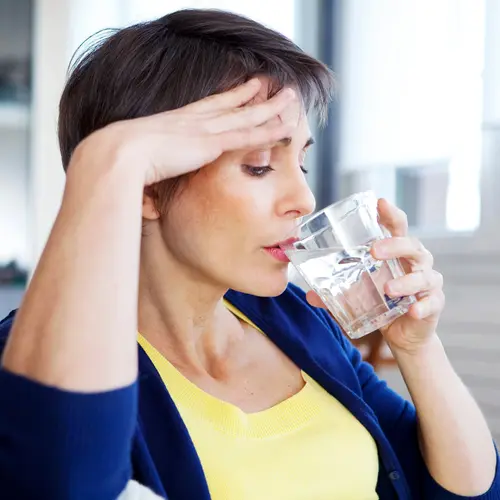
Most women nearing menopause will begin experiencing vasomotor symptoms (VMS). The most common is hot flashes. During a hot flash there is a sudden feeling of warmth that spreads over the upper body, often with blushing, a racing heart, and sweating. These flashes can range from mild in most women to severe in others.
You may also notice other symptoms of menopause such as:
- Uneven or missed periods
- Vaginal dryness
- Sore breasts
- Needing to pee more often
- Trouble sleeping
- Emotional changes
- Dry skin, eyes, or mouth
Symptoms of menopause
Other symptoms include:
- Fatigue
- Depression
- Crankiness
- Headaches
- Joint and muscle aches and pains
- Weight gain
- Hair loss
- Changes in libido (sex drive)
What Happens During Menopause?
Natural menopause isn’t caused by any type of medical or surgical treatment. It’s slow and has three stages:
- Perimenopause. This phase usually begins several years before menopause, when your ovaries slowly make less estrogen. Perimenopause lasts until menopause, the point at which your ovaries stop releasing eggs. In the last 1 to 2 years of this stage, estrogen levels fall faster. Many women have menopause symptoms.
- Menopause. This is when it's been a year since you had a period. Your ovaries have stopped releasing eggs and making most of their estrogen.
- Postmenopause. These are the years after menopause. Menopausal VMS such as hot flashes and night sweats usually ease. But health risks related to the loss of estrogen increase as you get older.
What Conditions Cause Premature Menopause?
Your genes, some immune system disorders, or medical procedures can cause premature menopause. Other causes include:
- Premature ovarian failure (or primary ovarian insufficiency). When your ovaries prematurely stop releasing eggs, for unknown reasons, your levels of estrogen and progesterone change. When this happens before you’re 40, it's called premature ovarian failure. Unlike premature menopause, premature ovarian failure isn’t always permanent.
- Induced menopause. This happens when your doctor takes out your ovaries for medical reasons, such as uterine cancer or endometriosis. It can also happen when radiation or chemotherapy damages your ovaries.
What Doesn't Cause Premature Menopause?
Some things you might think would influence menopause age, but don’t:
Hormonal birth control. Even if you’re using a birth control method that stops ovulation, it doesn’t stop your loss of follicles -- the constant process of your ovary taking them from your resting pool of eggs. All of your follicles available that month die away, even if you’re not ovulating, so experts don't think that birth control delays menopause.
Ethnicity. A study of premenopausal and early perimenopausal women found that race and ethnicity play no role in the age when you experience menopause. The Study of Women’s Health Across the Nation (SWAN) looked at women from different races from seven states and found they experienced menopause around the same age.
How Long Do Symptoms of Menopause Last?
Menopause is different in each woman. In general, the symptoms of perimenopause last about 4 years.
Menopause Diagnosis
You might suspect that you’re going into menopause. Or your doctor will say something, based on symptoms you've told them about.
You can keep track of your periods and chart them as they become uneven. The pattern will be another clue to your doctor that you’re perimenopausal or nearing menopause.
Your doctor might also test your blood for levels of:
- Follicle-stimulating hormone (FSH). This usually goes up as you near menopause.
- Estradiol. This tells your doctor how much estrogen your ovaries are making. This level will go down in menopause.
- Thyroid hormones. This shows problems with your thyroid gland, which can affect your period and cause symptoms that look like menopause.
Menopause Treatment
Menopause is a natural process. Many symptoms will go away over time. But if they’re causing problems, treatments can help you feel better. Common ones include:
- Hormone replacement therapy (HRT). This is also called menopausal hormone therapy. You take medications to replace the hormones that your body isn’t making anymore. Certain drugs or combinations can help with hot flashes and vaginal symptoms, as well as making your bones stronger. But they can also put you at higher risk of health problems like heart disease or breast cancer, so you should take the lowest dose that works for the shortest time possible.
- Topical hormone therapy. This is an estrogen cream, insert, or gel that you put in your vagina to help with dryness.
- Nonhormone medications. The depression drug paroxetine (Brisdelle, Paxil) is FDA-approved to treat hot flashes. The nerve drug gabapentin (Gralise, Neuraptine, Neurontin) and the blood pressure drug clonidine (Catapres, Kapvay) might also ease them. Medicines called selective estrogen receptor modulators (SERMs) help your body use its estrogen to treat hot flashes and vaginal dryness.
- Medications for osteoporosis. You might take medicines or vitamin D supplements to help keep your bones strong.
Lifestyle changes
Lifestyle changes help many women deal with menopause symptoms. Try these steps:
- If you’re having a vasomotor symptom like hot flashes, drink cold water, sit or sleep near a fan, and dress in layers.
- Use an over-the-counter vaginal moisturizer or lubricant for dryness.
- Exercise regularly to sleep better and prevent conditions like heart disease, diabetes, and osteoporosis.
- Strengthen your pelvic floor muscles with Kegel exercises to prevent bladder leaks.
- Stay socially and mentally active to prevent memory problems.
- Don’t smoke. Tobacco might cause early menopause and increase hot flashes.
- Limit how much alcohol you drink, to lower your chance of getting breast cancer and help you sleep better.
- Eat a variety of foods and keep a healthy weight to help with hot flashes.
- Practice things like yoga, deep breathing, or massage to help you relax.
Menopause diet. What you eat might affect when you enter menopause, research suggests.
After tracking more than 35,000 British women for 4 years, researchers found that menopause tends to start earlier for those whose diets are heavy in refined carbs. In contrast, it seems to begin later for those who eat a lot of fish and legumes.
"In particular, a higher consumption of oily fish was found to delay the timing of natural menopause by approximately 3 years, and fresh legumes -- such as peas and green beans -- was linked to a later menopause by around a year," said study author Yashvee Dunneram.
"On the other hand, a higher consumption of refined carbohydrates -- such as pasta and rice -- hastened the onset of menopause by 1.5 years," said Dunneram.
"Refined carbs are one of the main culprits for insulin resistance. A high level of circulating insulin could interfere with sex hormone activity and boost estrogen levels, both of which might increase the number of menstrual cycles and deplete egg supply faster, thus causing an earlier menopause."
As for those with a vegetarian diet, researchers found they experience menopause about a year earlier than meat eaters. The high-fiber and low-animal-fat content in some vegetarian meals has been linked to low estrogen levels.
But meat eaters who ate higher daily amounts of savory foods -- such as potato chips, pretzels, and peanuts -- experienced menopause about 2 years earlier than meat eaters who didn't.
More research is needed to further understand the diet-menopause connection.
Alternative and Complementary Menopause Treatments
Some studies have found that soy products relieve hot flashes, but researchers are still looking into it. There aren’t many large studies on whether other supplements such as black cohosh or “bioidentical” hormones work for menopause symptoms. Talk to your doctor before starting any herbal or dietary supplements.
Yoga, tai chi, and acupuncture are safer ways to manage menopause symptoms.
Menopause Complications
The loss of estrogen linked with menopause is tied to the following health problems that become more common as women age.
After menopause, women are more likely to have:
- Bone loss (osteoporosis)
- Heart disease
- Bladder and bowels that don’t work like they should
- Higher risk of Alzheimer's disease
- More wrinkles
- Poor muscle power and tone
- Weaker vision, such as from cataracts (clouding of the lens of the eye) and macular degeneration (breakdown of the tiny spot in the center of the retina that is the center of vision)
It can be tough to manage the sexual changes that come along with menopause, like vaginal dryness and a loss of sex drive. You might also find that you don’t enjoy sex as much and have trouble reaching orgasm. As long as it isn’t painful, regular sexual activity may help keep your vagina healthy by promoting blood flow.
Your ovaries have stopped sending out eggs once you’re in menopause, so you can’t get pregnant. But you can still get a sexually transmitted disease. Use safer sex practices if you’re not in a relationship with one person.