
Osteoarthritis Health Center
Arthritis: Tendinitis
What Is Tendinitis?
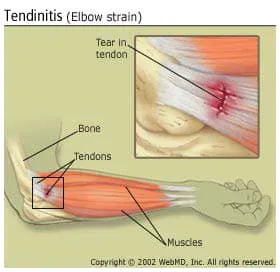
Tendinitis is an inflammation or irritation of the tendon, a thick cord that attaches bone to muscle.
What Causes Tendinitis?
Tendinitis is most often caused by repetitive, minor impact on the affected area, or from a sudden more serious injury.
There are many activities that can cause Tendinitis, including:
- Gardening
- Raking
- Carpentry
- Shoveling
- Painting
- Scrubbing
- Tennis
- Golf
- Skiing
- Throwing and pitching
Incorrect posture at work or home or poor stretching or conditioning before exercise or playing sports also increases a person's risk. Other risk factors for Tendinitis, include:
Achilles Tendon Problems
What is the Achilles tendon?
The Achilles tendon connects the calf muscle to the heel bone. It is the biggest tendon in the human body and allows you to rise up on your toes and push off while walking or running.
What are common Achilles tendon problems?
The two main problems found in the Achilles tendon are:
- Achilles tendinopathy. Achilles tendinopathy refers to one of two conditions:
- Achilles tendon tear or rupture. An Achilles tendon can partially tear or completely tear (rupture). While a partial tear may cause mild or no symptoms, a complete rupture causes pain and sudden loss of strength and movement.
- An abnormal or poorly placed bone or joint (such as length differences in your legs or arthritis in a joint) that stresses soft-tissue structures
- Stresses from other conditions, such as rheumatoid arthritis, gout, psoriatic arthritis, thyroid disorders, or unusual medication reactions
Occasionally an infection can cause Tendinitis.
Who Gets Tendinitis?
Anyone can get Tendinitis, but it is more common in adults, especially those over 40 years of age. As tendons age they tolerate less stress, are less elastic, and are easier to tear.
Where Does Tendinitis Occur?
Tendinitis can occur in almost any area of the body where a tendon connects a bone to a muscle. The most common places are:
- Base of the thumb
- Elbow
- Shoulder
- Hip
- Knee
- Achilles tendon
What Are the Symptoms of Tendinitis?
The symptoms of Tendinitis include:
- Pain at the site of the tendon and surrounding area. Pain may be a gradual buildup or sudden and severe, especially if calcium deposits are present.
- Loss of motion in the shoulder, called "adhesive capsulitis" or frozen shoulder.
How Can I Avoid Tendinitis?
When performing activities:
- Take it slow at first. Gradually build up your activity level.
- Use limited force and limited repetitions.
- Stop if unusual pain occurs. Do something else. Try again later and if pain recurs, stop that activity for the day.
How Is Tendinitis Treated?
Initial treatment includes:
- Avoiding activities that aggravate the problem
- Resting the injured area
- Icing the area the day of the injury
- Taking over-the-counter anti-inflammatory medicines
If the condition does not improve in a week, see your doctor. You may need more advanced treatments, including:
- Corticosteroid injections. Corticosteroids (often called " steroids") are often used because they work quickly to decrease the inflammation and pain.
- Physical therapy. This can be very beneficial, especially for a "frozen shoeulder." Physical therapy includes range of motion exercises and splinting (thumb, forearm, bands).
- Surgery. This is only rarely needed for severe problems not responding to other treatments.
WebMD Medical Reference provided in collaboration with the Cleveland Clinic![]()
ORENCIA® (abatacept) Important Safety Information
Indication and Usage
ORENCIA® (abatacept) is a prescription medicine that reduces signs and symptoms in adults with moderate to severe rheumatoid arthritis (RA), including those who have not been helped enough by other medicines for RA. ORENCIA may prevent further damage to your bones and joints and may help your ability to perform daily activities.
Important Safety Information About ORENCIA® (abatacept)
Before you receive treatment with ORENCIA, a lyophilized powder for intravenous infusion, you should tell your doctor about all your medical conditions, including if you:
- have any kind of infection even if it is small (such as an open cut or sore) or an infection that is in your whole body (such as the flu).
- have an infection that will not go away or a history of infections that keep coming back.
- have had tuberculosis (TB), a positive skin test for TB, or if you recently have been in close contact with someone who has had TB. If you get any of the symptoms of TB (a dry cough that doesn’t go away, weight loss, fever, night sweats), call your doctor right away. Before you start ORENCIA, your doctor may examine you for TB or perform a skin test.
- have or have had viral hepatitis. Before you use ORENCIA, your doctor may examine you for hepatitis.
- have a history of chronic obstructive pulmonary (lung) disease (COPD).
- are scheduled to have surgery.
- are allergic to any of the following ingredients in ORENCIA: abatacept, maltose, monobasic sodium phosphate, or sodium chloride for administration.
- recently received a vaccination or are scheduled for any vaccination.
- have diabetes and use a blood glucose monitor to check your sugar levels. The infusion of ORENCIA contains maltose, a sugar that can give falsely high blood glucose readings with some monitors on the day you receive your infusion. Your doctor may tell you to use a different way to monitor your blood sugar levels.
- are pregnant, planning to become pregnant, or are thinking about becoming pregnant. It is not known if ORENCIA can harm your unborn baby.
- are breast-feeding. You will need to decide to either breast-feed or receive treatment with ORENCIA, but not both.
- take any other kinds of medicine, including prescription and nonprescription medicines, vitamins, and herbal supplements.
- are taking other biologic medicines to treat RA such as: Enbrel® (etanercept), Humira® (adalimumab), Remicade® (infliximab), Kineret® (anakinra) or Rituxan® (rituximab). You may have a higher chance of getting a serious infection if you take ORENCIA with other biologic medicines.
Possible Side Effects of ORENCIA® (abatacept)
ORENCIA can cause serious side effects including:
- Serious infections. Patients receiving ORENCIA have a higher chance of getting infections including pneumonia, and other infections caused by viruses, bacteria, or fungi. Call your doctor immediately if you feel sick or get any of the following signs of infection: fever, feel very tired, cough, feel flu-like, or warm, red or painful skin.
- Allergic reactions. Allergic reactions can happen on the day of treatment or the day after receiving ORENCIA. Tell your doctor or get emergency medical help right away if you have hives, swollen face, eyelids, lips, tongue, throat, or trouble breathing.
- Cancer (malignancies). Certain kinds of cancer have been reported in patients receiving ORENCIA. It is not known if ORENCIA increases your chance of getting certain kinds of cancer.
- Vaccinations. You should not receive ORENCIA with certain types of vaccines. ORENCIA may cause some vaccinations to be less effective.
- Respiratory problems in patients with COPD. You may get certain respiratory problems more often if you receive ORENCIA and have COPD, including: worsened COPD, pneumonia, cough, or trouble breathing.
The more common side effects with ORENCIA are headache, upper respiratory tract infection, sore throat, and nausea.
Please read the Patient Information in the Full Prescribing Information below.
ORENCIA is a registered trademark of Bristol-Myers Squibb Company.
All other trademarks are property of their respective companies.

Read more about Achilles tendon problems