
Surprise: Everyone has some belly fat, even people who have flat abs.
That's normal. Fat is an essential part of the human body. But too much belly fat can affect your health in a way that other fat doesn't.
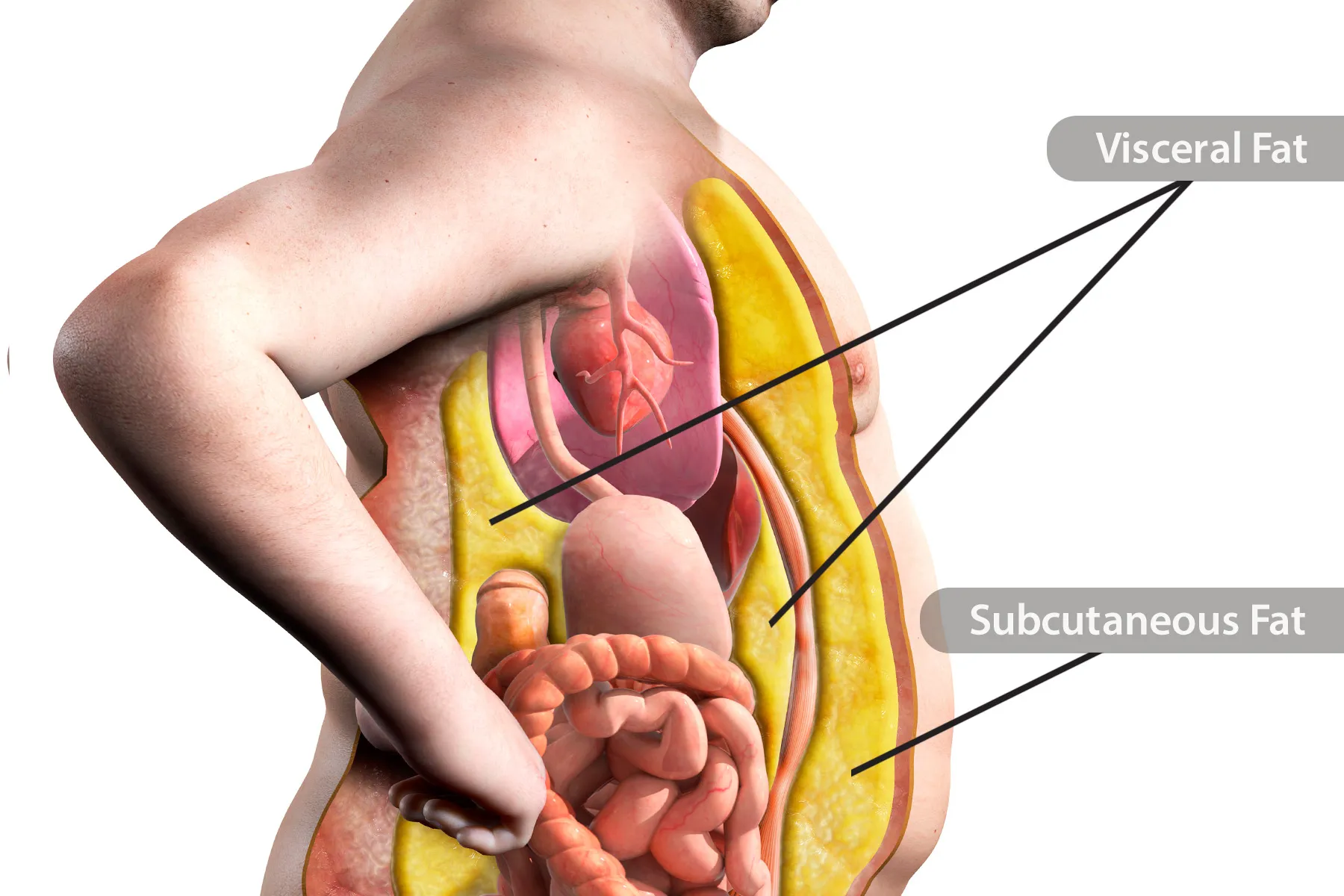
Some of your fat is right under your skin. That's called subcutaneous fat.
Another type of fat is deeper inside your abdomen. It's around your heart, lungs, liver, and other organs. This is ", or what scientists call "visceral adipose tissue."
Visceral fat may be the bigger health problem, even for thin people.
Deep Belly Fat
You need some visceral fat. It provides cushioning around your organs.
But if you have too much of it, you may be more likely to get high blood pressure, type 2 diabetes, heart disease, dementia, and certain cancers, including breast cancer and colon cancer.
The fat doesn't just sit there. It's an active part of your body, making "lots of nasty substances," says Kristen Hairston, MD, assistant professor of endocrinology and metabolism at Wake Forest School of Medicine.
If you gain too much weight, your body starts to store your fat in unusual places.
With increasing obesity, you have people whose regular areas to store fat are so full that the fat is deposited into the organs and around the heart, says Carol Shively, PhD, professor of pathology-comparative medicine at Wake Forest School of Medicine.
How Much Belly Fat Do You Have?
The most precise way to determine how much visceral fat you have is to get a CT scan or MRI. But there's a much simpler, low-cost way to check.
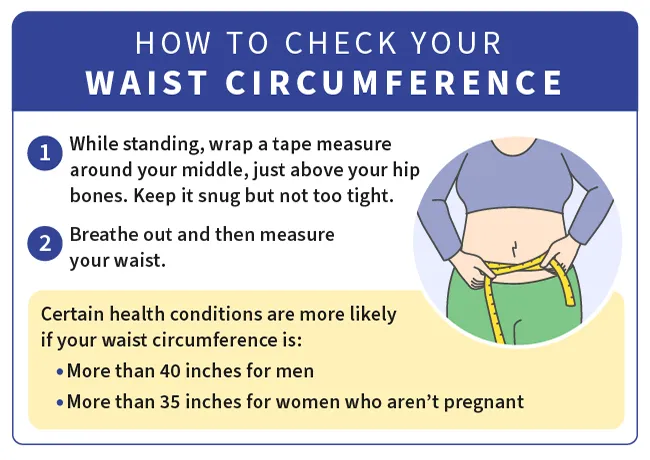
Get a measuring tape, wrap it around your waist at your belly button, and check your girth. Do it while you're standing up, and make sure the tape measure is level.
For your health's sake, you want your waist size to be less than 35 inches if you're a woman and less than 40 inches if you're a man.
Having a "pear shape" -- bigger hips and thighs -- is considered safer than an "apple shape," which describes a wider waistline.
“What we’re really pointing to with the apple versus pear,” Hairston says, "is that, if you have more abdominal fat, it’s probably an indicator that you have more visceral fat."
Thin People Have It, Too
Even if you're thin, you can still have too much visceral fat.
How much you have is partly about your genes, and partly about your lifestyle, especially how active you are.
Visceral fat likes inactivity. In one study, thin people who watched their diets but didn't exercise were more likely to have too much visceral fat.
The key is to be active, no matter what size you are.
4 Steps for Beating Belly Fat
There are four keys to controlling belly fat: exercise, diet, sleep, and stress management.
1. Exercise: Vigorous exercise trims all your fat, including visceral fat.
Get at least 30 minutes of moderate exercise at least 5 days a week. Walking counts, as long as it's brisk enough that you work up a sweat and breathe harder, with your heart rate faster than usual.
To get the same results in half the time, step up your pace and get vigorous exercise -- like jogging or walking. You'd need to do that for 20 minutes a day, 4 days a week.
Jog, if you're already fit, or walk briskly at an incline on a treadmill if you're not ready for jogging. Vigorous workouts on stationary bikes and elliptical or rowing machines are also effective, says Duke researcher Cris Slentz, PhD.
Moderate activity -- raising your heart rate for 30 minutes at least three times per week -- also helps. It slows down how much visceral fat you gain. But to torch visceral fat, your workouts may need to be stepped up.
“Rake leaves, walk, garden, go to Zumba, play soccer with your kids. It doesn’t have to be in the gym,” Hairston says.
If you are not active now, it's a good idea to check with your health care provider before starting a new fitness program.
2. Diet: There is no magic diet for belly fat. But when you lose weight on any diet, belly fat usually goes first.
Getting enough fiber can help. Hairston’s research shows that people who eat 10 grams of soluble fiber per day -- without any other diet changes -- build up less visceral fat over time than others. That’s as simple as eating two small apples, a cup of green peas, or a half-cup of pinto beans.
“Even if you kept everything else the same but switched to a higher-fiber bread, you might be able to better maintain your weight over time,” Hairston says.
3. Sleep: Getting the right amount of shut-eye helps. In one study, people who got 6 to 7 hours of sleep per night gained less visceral fat over 5 years compared to those who slept 5 or fewer hours per night or 8 or more hours per night. Sleep may not have been the only thing that mattered -- but it was part of the picture.
4. Stress: Everyone has stress. How you handle it matters. The best things you can do include relaxing with friends and family, meditating, exercising to blow off steam, and getting counseling. That leaves you healthier and better prepared to make good choices for yourself.
“If you could only afford the time to do one of these things," Shively says, "exercise probably has the most immediate benefits, because it gets at both obesity and stress.”