

What Is Tendinosis?
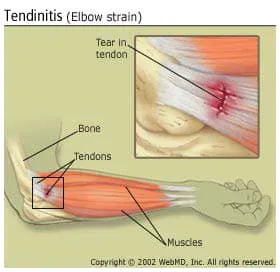
Tendinosis (also called tendinopathy) is an inflammation or irritation of a tendon, a thick cord that attaches bone to muscle.
What Causes Tendinosis?
Tendinosis is most often caused by repetitive, minor impact on the affected area, or from a sudden more serious injury.
There are many activities that can cause tendinosis, including:
- Gardening
- Raking
- Carpentry
- Cleaning house
- Shoveling
- Painting
- Scrubbing
- Tennis
- Golf
- Skiing
- Throwing and pitching
Incorrect posture at work or home or poor conditioning before exercise or playing sports also increases a person's risk. Other risk factors for tendinosis include:
- An abnormal or poorly placed bone or joint (such as length differences in your legs or arthritis in a joint) that stresses soft-tissue structures.
- Stresses from other conditions, such as rheumatoid arthritis, gout, psoriatic arthritis, thyroid disorders, or unusual medication reactions.
- Overuse or doing too much too soon when the tendons aren't used to making a movement or doing the task taken on. Tendinosis is common in "weekend warriors," people that play and exercise hard only on weekends.
- Occasionally an infection can cause tendinosis, especially infection from a cat or dog bite to the hand or a finger.
- Psoriatic arthritis. This is a combination of a skin disorder (psoriasis) and joint inflammation (arthritis). You most often may notice throbbing pain and stiffness over the tendons of your fingers, hands, and toes.
Who Gets Tendinosis?
Anyone can get tendinosis, but it is more common in adults, especially those over age 40. As tendons age they tolerate less stress, are less elastic, and are easier to tear.
Where Does Tendinosis Occur?
Tendinosis can occur in almost any area of the body where a tendon connects a bone to a muscle. The most common places are:
- Base of the thumb
- Elbow
- Shoulder
- Hip
- Knee
- Achilles tendon
What Are the Symptoms of Tendinosis?
The symptoms of tendinosis include:
- Pain at the site of the tendon and surrounding area. Pain may gradually build up or be sudden and severe, especially if calcium deposits are present.
- Loss of motion in the shoulder, called "adhesive capsulitis" or frozen shoulder.
How Can I Avoid Tendinitis?
To avoid tendinosis, try these tips when performing activities:
- Take it slow at first. Gradually build up your activity level.
- Use limited force and limited repetitions.
- Stop if pain occurs. Do something else. Try again later and if pain recurs, stop that activity for the day.
How Is Tendinosis Treated?
Initial treatment of tendinosis includes:
- Avoiding activities that aggravate the problem
- Resting the injured area
- Icing the area the day of the injury
- Taking over-the-counter anti-inflammatory drugs or using topical anti-inflammatory gels
If the condition does not improve in a week, see your doctor. You may need more advanced treatments, including:
- Corticosteroid injections. Corticosteroids (often called simply "steroids") are often used because they work quickly to decrease the inflammation and pain.
- Physical therapy. This can be very beneficial, especially for a "frozen shoulder." Physical therapy includes range-of-motion exercises and splinting (thumb, forearm, bands).
- Surgery. This is only rarely needed for severe problems not responding to other treatments.
How Long Will Recovery From Tendinosis Take?
Tendinosis may take weeks to months to go away, depending on the severity of your injury.
Warning
You should see your doctor if you experience any of the following:
- Fever (over 100 degrees Fahrenheit)
- Swelling, redness, and warmth
- General illness or multiple sites of pain
- Inability to move the affected area
These could be signs of another problem that needs more immediate attention.