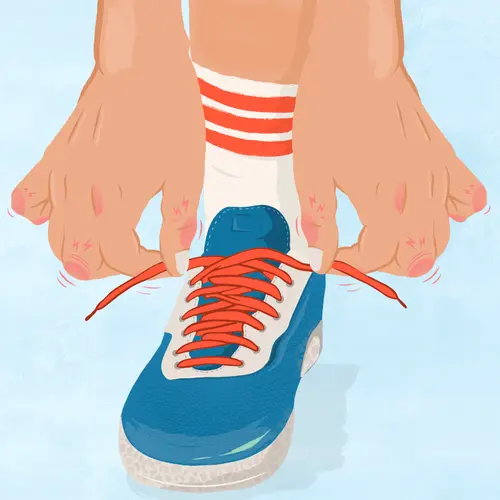
If a child, or a teen younger than 16, has joint inflammation and stiffness for more than 6 weeks, it may be juvenile idiopathic arthritis, formerly called juvenile idiopathic arthritis.
The inflammation can cause redness, swelling, warmth, and soreness in the joints. But some children who have it might not complain about the joint pain.
The condition can affect any joint, and it may limit how well that joint works.
Most children with juvenile idiopathic arthritis recover fully. With the right treatment, they’re likely to do well and live a normal life.
Causes
Juvenile idiopathic arthritis is an autoimmune disorder. This means that the immune system attacks healthy cells and tissues. That causes the inflammation.
Researchers don't know exactly why it happens. But they think it's a two-step process. First, something in a child’s genes makes them more likely to get it. Then something else, like a virus, triggers the arthritis itself.
How Is It Different From Adult Rheumatoid Arthritis?
Adults who have it usually have symptoms all their lives. But studies show that by adulthood, 70% of children with juvenile idiopathic arthritis outgrow it. They don’t have symptoms anymore.
Symptoms
Besides joint pain, it may cause chronic fever and anemia, which is a shortage of red blood cells. It can also affect the heart, lungs, eyes, and nervous system.
Flare-ups, times when it gets worse, can last for several weeks. Later on, symptoms may lessen. They include:
Different Types of Juvenile Idiopathic Arthritis
There are three kinds. Each type is based on the number of joints involved, the symptoms, and certain antibodies that may be in the blood.
- Four or fewer joints are involved. Doctors call this pauciarticular juvenile idiopathic arthritis.
It’s the most common form. About half of all children with juvenile idiopathic arthritis have this type.
It usually affects large joints like the knees. Girls under age 8 are most likely to get it.
Some children with this type have special proteins in the blood called antinuclear antibodies. They are more likely to get eye diseases like iritis, which is inflammation of the iris, or colored part of the eye. They can also get uveitis, which is inflammation of the inner eye. These children need regular eye exams by an ophthalmologist, a doctor who specializes in eye diseases.
Lots of children with this condition will outgrow it by adulthood. Still, eye problems can continue, and joint symptoms may come back.
- Five or more joints are involved. You may hear this called polyarticular juvenile idiopathic arthritis.
About 30% of all children with juvenile idiopathic arthritis have this type. It usually affects the small joints, like those in the hands and feet, but it can sometimes involve the large joints.
This type of juvenile idiopathic arthritis is usually symmetrical. That means it affects the same joints on both sides of the body.
Some children who have this have an immune system chemical called rheumatoid factor in their blood. They often have a more severe form of the condition.
- It affects much of the body. Doctors may call this form “systemic.”
Signs of this include joint swelling, fever, and a light pink rash. It may involve the heart, liver, spleen, and lymph nodes.
A small percentage of children who have it develop arthritis in their joints. They may have severe arthritis that lasts into adulthood.
Diagnosis
Juvenile idiopathic arthritis is often hard to diagnose. Sometimes children who have it do not complain of pain. In fact, parents may not be aware of symptoms.
Some symptoms are similar to other serious conditions like infections, cancer, bone disorders, Lyme disease, and lupus.
If a doctor thinks a child may have juvenile idiopathic arthritis, they will ask about symptoms and the family’s medical history. They will give the child a physical exam to look for joint swelling, rashes, signs of internal organ inflammation, and eye problems. They may also take samples of the child’s blood and joint fluid, and use X-rays or other tests.
Treatment
Treatment usually includes medications along with exercise. The goals are to:
- Stop inflammation
- Ease pain and swelling
- Strengthen joints and help them move better
- Prevent joint damage and other complications
Medications
Medications for juvenile idiopathic arthritis include:
NSAIDS (Nonsteroidal Anti-Inflammatory Drugs)
The medicines can curb pain, fever, and inflammation.
They come as a liquid or a pill. People usually take them from one to 4 times a day. Some common NSAIDs are aspirin, ibuprofen, naproxen, and tolmetin.
While NSAIDs ease pain and inflammation, they also have side effects. These include stomach pain, nausea, vomiting, headache, and anemia. Sometimes your doctor will give you another stomach-protecting medication to take with the NSAIDs. This will make stomach bleeding less likely.
If you child does not respond well to NSAIDS, the doctor may prescribe a new drug called Xatmep. Xatmep is the first ready-to-use oral solution formulation of methotrexate to be approved for use in children with polyarticular juvenile idiopathic arthritis. An aggressive therapy, this medicine helps reduce further joint damage and helps preserve joint function. Side effects can include dizziness, fatigue, chills and fever.
Meds That Stop the Condition From Getting Worse
Your doctor may prescribe “DMARDs,” which stands for Disease-Modifying Antirheumatic Drugs. They also help with joint stiffness, pain, and swelling. Examples include hydroxychloroquine (Plaquenil), methotrexate, and sulfasalazine (Azulfidine).
It may take about 3 to 6 months for these medicines to work.
Because these are strong drugs, your child will need frequent tests to check for side effects. They can include anemia, low blood count, and kidney and liver problems. Other possible problems could be stomach aches, diarrhea, vomiting, nausea, headaches, rashes, loss of appetite, and weakness.
“Biologic” Drugs for Your Immune System
These drugs are genetically engineered to work on the immune system. They include adalimumab (Humira), adalimumab-atto (Amjevita), a biosimilar to Humira, anakinra (Kineret), etanercept (Enbrel), etanercept-szzs (Ereizi), a biosimilar to Enbrel, infliximab (Remicade), and infliximab-dyyb (Inflectra), a biosimilar to Remicade.
If you take them, you are more likely to get an infection, including serious diseases like tuberculosis. Some biologics are only approved by the FDA for use in adults. Check with your doctor about which ones are appropriate for children.
If You Need Corticosteroids
These are strong, anti-inflammatory drugs. Doctors usually prescribe them only if other treatments don’t work, or if the condition is severe.
This type of steroid isn’t the kind that bulks up your muscles.
Corticosteroids come in pills or liquids, and are usually prescribed for short periods of time and in low dosages. Serious side effects can happen if they’re taken too long. These include stunted growth, ulcers, mood swings, weight gain, "moon face," muscle weakness, high blood pressure, osteoporosis, cataracts, and infections.
Examples of steroids include dexamethasone, hydrocortisone, methylprednisolone, prednisolone, and prednisone.
Exercise
Exercise and physical activity are important for children with juvenile idiopathic arthritis. Movement brings less pain, builds strength, and keeps joints moving well.
With the help of physical and occupational therapists, children learn simple ways to do everyday things. Therapists teach them exercises to improve their flexibility and strength.
It can help to use hot and cold treatments. For instance, a warm compress can loosen up a stiff muscle and an ice pack often reduces swelling and inflammation.
Therapists can also make splints for children to correctly position their joints and reduce pain. They can be used on knees, wrists, and fingers, as well as at night during sleep.
If your child has juvenile idiopathic arthritis, encourage them to get out there and be active. Avoid contact sports and instead go for things that are not stressful on the joints, like swimming.
Complications
Eye problems are linked to some forms of juvenile idiopathic arthritis, so keep up with your child’s eye tests.
The condition can also cause problems with oral health if it affects the jaw and makes it hard to brush and floss teeth. Dentists can recommend special toothbrushes and floss to help children take care of their mouths.
Temporomandibular joint (TMJ) or jaw pain sometimes happens with juvenile idiopathic arthritis. Certain exercises can help with jaw pain and stiffness. If the lower jaw doesn’t develop correctly, it can cause an overbite. An orthodontist can usually fix this. In some cases, surgery may be needed.
You may also want to check with your child’s doctor about their weight. Some children with the condition may need more calories. Others gain too much weight because they have problems being active, or because of side effects from medication. Extra weight is hard on the joints.