
Fitness After Injury
Hide Video Transcript
Video Transcript
Narrator
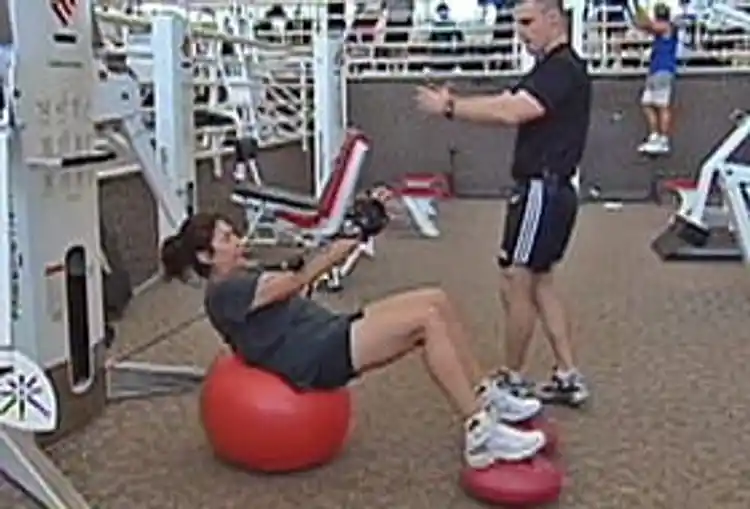
Busy advertising executive Yolanda O'Hern cherishes this special time of her high pressure day-time she has scheduled just for herself - her daily workout. Aaron Small
Let me grab some dumbbells. Yolanda O'Hern
It helps me keep a cool head and just take a deep breath and deal with conflict a lot better. Aaron Small
Looking good. Narrator
Despite her best efforts, Yolanda suffered injuries in the last few years that sidelined her exercise routine: first her knee, then her back. Master Trainer Aaron Small often sees such injuries among baby boomers. Aaron Small
They have the right intentions, they want to work out and exercise and they are very motivated to do so. However, improper stretching and warm-up can factor in to many injuries that they sustain. Also, improper use of the machines can lead to injuries, particularly in the back. Narrator
Once injured, experts suggest the following when restarting weight training: stay active - work out the parts of the body that are not injured - after carefully stretching the areas those are; always begin with a 5-10 minute warm-up; begin strength training with low loads and pain free motion; add weight slowly; add reps before you add weight; always stretch what you strengthen; if you can, try to get some assistance from a qualified trainer to help you adapt exercises to your personal benefit. Aaron Small
Tight abs, protect the back, definitely a lot stronger. Narrator
For WebMD, I'm Sandee LaMotte