What Is Asthma?
Asthma is a long-term disease of the lungs. It causes your airways to get inflamed and narrow, which makes it hard to breathe. Severe asthma can cause trouble talking or being active. You might hear your doctor call it a chronic respiratory disease. Some people refer to asthma as "bronchial asthma."
Asthma is a serious disease that affects about 25 million Americans and causes nearly 1.6 million emergency room visits every year. With treatment, you can live well. Without it, you might have to go to the ER often or stay at the hospital, which can affect your daily life.
Asthma Symptoms
Asthma is marked by inflammation of the bronchial tubes, with extra sticky secretions inside the tubes. People with asthma have symptoms when the airways tighten, inflame, or fill with mucus.
There are three major signs of asthma:
Airway blockage. When you breathe as usual, the bands of muscle around your airways are relaxed, and the air moves freely. But when you have asthma, the muscles tighten. It’s harder for the air to pass through.
Inflammation. Asthma causes red, swollen bronchial tubes in your lungs. This inflammation can damage your lungs. Treating this is key to managing asthma in the long run.
Irritated airways. People with asthma have sensitive airways that tend to overreact and narrow when they come into contact with even slight triggers.
These problems may cause symptoms such as:
- Coughing, especially at night or in the morning
- Wheezing, a whistling sound when you breathe
- Shortness of breath
- Tightness, pain, or pressure in your chest
- Trouble sleeping because of breathing problems
Not every person with asthma has the same symptoms in the same way. You may not have all of these symptoms, or you may have different symptoms at different times. Your symptoms may also vary from one asthma attack to the next, being mild during one and severe during another.
Some people with asthma may go for long periods without having any symptoms. Others might have problems every day. And some people may have asthma only during exercise or with viral infections such as colds.
Mild asthma attacks are generally more common. Usually, the airways open up within a few minutes to a few hours. Severe attacks are less common but last longer and need medical help right away. It is important to recognize and treat even mild asthma symptoms to help you prevent severe episodes and keep asthma under better control.
When to see your doctor
Get medical help right away if you have serious symptoms, including:
- Fast breathing
- Pale or blue face, lips, or fingernails
- The skin around your ribs pulls inward when you breathe in
- Trouble breathing, walking, or talking
- Symptoms that don’t get better after you take medication
What Is an Asthma Attack?
An asthma attack happens when bands of muscle around the airways are triggered to tighten. This tightening is called a bronchospasm. During the attack, the lining of the airways becomes swollen or inflamed, and the cells lining the airways make more and thicker mucus than normal.
All of these things -- bronchospasm, inflammation, and mucus production -- cause symptoms such as trouble breathing, wheezing, coughing, shortness of breath, and trouble with normal daily activities.
Other symptoms of an asthma attack include:
- Severe wheezing when breathing both in and out
- Coughing that won't stop
- Very rapid breathing
- Chest pain or pressure
- Tightened neck and chest muscles, called retractions
- Trouble talking
- Feelings of anxiety or panic
- A pale, sweaty face
- Blue lips or fingernails
An asthma attack can get worse quickly, so it's important to treat these symptoms right away.
Without immediate treatment, such as with your asthma inhaler or bronchodilator, it will become harder to breathe. If you use a peak flow meter at this time, the reading will probably be less than 50% of your normal peak flow reading. Many asthma action plans suggest action starting at 80% of normal.
As your lungs continue to tighten, you won’t be able to use the peak flow meter at all. Your lungs will tighten so there's not enough air movement to wheeze. You need to go to a hospital right away. Unfortunately, some people think that if wheezing stops, it's a sign of improvement, and they don’t get emergency care.
Without proper treatment, you may be unable to speak and will get a bluish coloring around your lips over time. This color change, known as cyanosis, means you have less and less oxygen in your blood. It can cause a loss of consciousness and death.
If you have an asthma attack, follow the "Red Zone" or emergency instructions in your asthma action plan right away. These symptoms happen in life-threatening asthma attacks. You need medical attention right away.
How Is Asthma Classified?
Doctors rank how bad asthma is by its symptoms:
Mild intermittent asthma. Mild symptoms appear less than twice a week, while nighttime symptoms appear less than twice a month. Few asthma attacks happen.
Mild persistent asthma. Symptoms appear three to six times a week. Nighttime symptoms happen three to four times a month. Asthma attacks might affect activities.
Moderate persistent asthma. This involves daily asthma symptoms. Nighttime attacks happen five or more times a month. Symptoms may affect activities.
Severe persistent asthma. This involves ongoing symptoms during the day as well as at night. You have to limit your activities.
Your asthma may be getting worse if you:
- Have symptoms more often and they interfere more with your daily life
- Have a hard time breathing (you can measure this with a device called a peak flow meter)
- Need to use a quick-relief inhaler more often
Types of Asthma
There are several types of asthma:
Adult-onset asthma
Asthma can start at any age, but it's more common in people younger than 40.
Symptoms can vary from episode to episode in the same child. Watch for problems such as:
- Coughing often, especially during play, at night, or while laughing. This may be the only symptom.
- Less energy or pausing to catch their breath while they play
- Fast or shallow breathing
- Saying their chest hurts or feels tight
- A whistling sound when they breathe in or out
- Seesaw motions in their chest because of trouble breathing
- Shortness of breath
- Tight neck and chest muscles
- Weakness or fatigue
Things that trigger allergies, such as dust, pollen, and pet dander, can also cause asthma attacks.
Exercise-induced asthma
This form of asthma happens during physical activity when you breathe in air that’s drier than what’s in your body, and your airways narrow. It can affect people who don’t have asthma, too. You’ll notice symptoms within a few minutes after you start to exercise, and they might last 10-15 minutes after you stop.
Eosinophilic asthma
This severe form is marked by high levels of white blood cells called eosinophils. It usually affects adults aged 35-50.
Other types of asthma
Nonallergic asthma. This type flares up in extreme weather. It could be the heat of summer or the cold of winter. It could also show up when you’re stressed or have a cold.
Status asthmaticus. These long-lasting asthma attacks don’t go away when you use bronchodilators. They’re a medical emergency that needs treatment right away.
Occupational asthma. This usually affects people who work around chemical fumes, dust, or other irritating things in the air.
Nocturnal asthma. Your asthma symptoms get worse at night.
Aspirin-induced asthma. You have asthma symptoms when you take aspirin, along with a runny nose, sneezing, sinus pressure, and a cough.
Cough-variant asthma. Unlike with other types, the only symptom of this kind of asthma is a long-term cough.
Asthma Causes and Triggers
When you have asthma, your airways react to things in the world around you. Doctors call these asthma triggers. They might cause symptoms or make them worse. Common asthma triggers include:
- Infections such as sinusitis, colds, and the flu
- Allergens such as pollen, mold, pet dander, and dust mites
- Irritants like strong odors from perfumes or cleaning solutions
- Air pollution
- Tobacco smoke
- Exercise
- Cold air or changes in the weather, such as temperature or humidity
- Gastroesophageal reflux disease (GERD)
- Strong emotions such as anxiety, laughter, sadness, or stress
- Medications such as aspirin
- Food preservatives called sulfites, found in things such as shrimp, pickles, beer and wine, dried fruits, and bottled lemon and lime juices
Asthma Risk Factors
Things that might make you more likely to have asthma include:
- Things in the world around you before you’re born or while you’re growing up
- Whether your parents have asthma, especially your mother
- Your genes
- Your race. Asthma is more common in people of African American or Puerto Rican descent.
- Your sex. Boys are more likely to have asthma than girls. In teens and adults, it’s more common in females.
- Your job
- Other conditions such as lung infections, allergies, or obesity
Women and Asthma
For women and those assigned female at birth (AFAB) who have asthma, things such as pregnancy, menstrual cycle, and menopause can affect the ability to breathe. Women who also have allergies and other asthma triggers may struggle to get a breath of fresh air.
Female hormones such as estrogen may have almost as much effect on the airways as allergies and hay fever. But estrogen itself is not the culprit in triggering the symptoms of asthma. Rather, it’s the fluctuation of estrogen — the up and down of hormone levels — that may cause inflammation in the airways.
Most women living with asthma are conscious of the seasons and specific allergies that might trigger their symptoms. They should be aware of their menstrual cycles as well. Shifting hormone levels can impact the state of their airways. So can pregnancy and menopause, when hormones and other things may affect asthma symptoms.
Asthma during pregnancy and menopause
Menstrual cycles. Your hormone levels change dramatically throughout your menstrual cycle — whether it’s regular or irregular. Asthma symptoms may be worse right before your period starts, when your estrogen levels are at a cycle low.
Pregnancy. The effect of pregnancy on asthma can vary widely. Pregnant people with asthma are broken down into thirds: For a third, asthma symptoms worsen; in the next third, they improve; and in the last third, they stay the same.
Whatever group you fall into, the good news is that asthma during pregnancy, if kept under control, does not increase the risk of maternal or infant complications.
Menopause. Menopause causes peaks and valleys in your estrogen levels — in many cases, more valleys than peaks. By keeping these levels more constant and avoiding dramatic drops that might trigger inflammation, asthma symptoms can be better managed. People assigned female at birth with asthma triggered by menopause should talk to their doctor about temporarily using hormone replacement therapy and gradually tapering it off.
Asthma Diagnosis
If you think you have asthma, see your doctor. They may refer you to a lung doctor, called a pulmonologist, or an allergy and immunology specialist.
The doctor will start with a physical exam and ask about your symptoms and medical history.
Asthma tests
Next, you’ll have tests to see how well your lungs work, which may include:
Spirometry. This simple breathing test measures how much air you blow out and how fast.
Peak flow. This measures how well your lungs push out air. They’re less exact than spirometry, but they can be a good way to test your lungs at home, even before you feel any symptoms. A peak flow meter can help you figure out what makes your asthma worse, whether your treatment is working, and when you need emergency care.
Methacholine challenge. This and similar tests involve using triggers or challenges. Adults are more likely to have this test than children. You might get it if your symptoms and spirometry test don’t clearly show asthma. During this test, you inhale a chemical called methacholine before and after spirometry to see if it makes your airways narrow. If your results fall at least 20%, you may have asthma. Your doctor will give you medicine at the end of the test to reverse the effects of the methacholine.
Exhaled nitric oxide test. You breathe into a tube connected to a machine that measures the amount of nitric oxide in your breath. Your body makes this gas normally, but levels could be high if your airways are inflamed.
Other tests you might get include:
Chest X-ray. It isn’t an asthma test, but your doctor can use it to make sure nothing else is causing your symptoms. An X-ray is an image of the inside of your body, made with low doses of radiation.
CT scan. This test takes a series of X-rays and puts them together to make a view of your insides. A scan of your lungs and sinuses can show physical problems or diseases (such as an infection) that may cause breathing problems or make them worse.
Allergy tests. These can be blood or skin tests. They tell if you’re allergic to pets, dust, mold, and pollen. Once you know your allergy triggers, you can get treatment to prevent them and asthma attacks.
Sputum eosinophils. This test looks for high levels of white blood cells (eosinophils) in the mix of saliva and mucus (sputum) that comes out when you cough.
Asthma Treatment
Many asthma treatments can ease your symptoms. Your doctor will work with you to make an asthma action plan that will outline your treatment and medications, including:
Asthma medications
Leukotriene modifiers. Another long-term asthma treatment, these medications block leukotrienes, things in your body that trigger an asthma attack. You take them as a pill once a day. Common leukotriene modifiers include:
Theophylline. It opens your airways and eases tightness in your chest. You take this long-term medication by mouth, either by itself or with an inhaled corticosteroid.
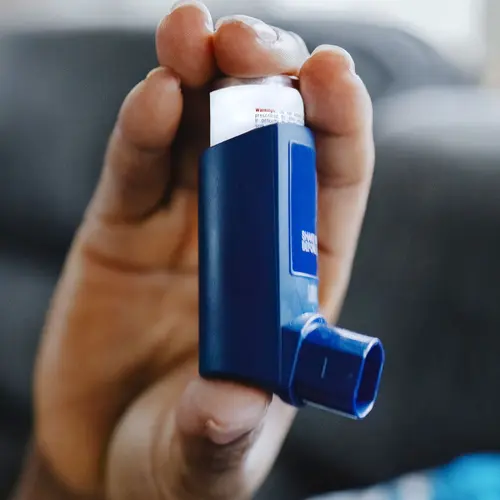
Asthma inhalers
Inhaled corticosteroids. These medications treat asthma in the long term. That means you’ll take them every day to keep your asthma under control. They prevent and ease swelling inside your airways, and they may help your body make less mucus. You’ll use a device called an inhaler to get the medicine into your lungs. Common examples of inhaled corticosteroids include:
Short-acting beta-agonists. These are known as rescue medicines or rescue inhalers. They loosen the bands of muscle around your airways and ease symptoms. Examples include:
- Albuterol (Accuneb, ProAir HFA, Proventil HFA, Ventolin HFA)
- Levalbuterol (Xopenex HFA)
Anticholinergics. These bronchodilators prevent the muscle bands around your airways from tightening. Common ones include:
- Ipratropium (Atrovent HFA): You can get ipratropium in an inhaler or as a solution for a nebulizer, a device that turns liquid medicine into a mist that you breathe in through a mouthpiece.
- Tiotropium bromide (Spiriva): This comes in a dry inhaler, which lets you breathe in the medicine as a dry powder.
Long-acting beta-agonists. These medications relax the muscle bands that surround your airways. You might hear them called bronchodilators. You’ll take these medications with an inhaler, even when you have no symptoms. They include:
Combination inhaler. This device gives you an inhaled corticosteroid, a long-acting beta-agonist, and sometimes another type of bronchodilator together to ease your asthma. Common ones include:
Other types of asthma treatment
Oral and intravenous corticosteroids. You’ll take these along with a rescue inhaler during an asthma attack. They ease swelling and inflammation in your airways. You’ll take oral steroids for a short time, between 5 days and 2 weeks. Common oral steroids include:
- Methylprednisolone (Medrol)
- Prednisolone (Flo-Pred, Orapred, Pediapred, Prelone)
- Prednisone (Deltasone)
You’re more likely to get steroids injected directly into a vein if you’re in the hospital for a bad asthma attack. This will get the medication into your system more quickly.
Biologics. If you have severe asthma that doesn’t respond to control medications, you might try a biologic:
- Omalizumab (Xolair) treats asthma caused by allergens. You get it as a shot every 2 to 4 weeks.
- Other biologics stop your immune cells from making things that cause inflammation. These drugs include:
- Benralizumab (Fasenra)
- Mepolizumab (Nucala)
- Reslizumab (Cinqair)
- Tezepelumab-ekko (Tezspire) is a first-in-class medicine for add-on maintenance treatment of adults and children 12 and older. Taken as a shot, it targets a molecule that causes inflammation in the airways.
Home remedies
Medication will probably be key to getting your asthma under control, but you can do some things at home to help:
- Avoid asthma triggers.
- Exercise regularly.
- Stay at a healthy weight.
- Take care of conditions that can trigger symptoms, such as GERD.
- Do breathing exercises to ease symptoms so you need less medication.
- Some people use complementary treatments such as yoga, acupuncture, and biofeedback, or supplements such as vitamin C and ding chuan tang. Talk to your doctor before trying any of these.
Asthma Complications
When it’s not under control, asthma can cause daily life problems, such as:
- Fatigue
- Lack of exercise and weight gain
- Hospital or ER visits
- Missing work
- Time away from school or trouble focusing on schoolwork
- Mental health issues such as stress, anxiety, and depression
Asthma can also lead to serious medical conditions, including:
Asthma Attack Prevention
Your action plan will include ways to keep your asthma under control and prevent attacks. These might include:
- Know your triggers, and stay away from them.
- Follow your doctor’s instructions on taking your asthma medications. Let them know if you notice that you’re using a quick-relief inhaler more often.
- Keep track of your condition and learn the signs that it might be getting worse. A peak flow meter can help.
- Know what to do if you think your asthma is getting worse.
- Talk to your doctor about vaccines to lower your chances of certain conditions. You might get vaccinations for COVID-19, the flu, pneumonia, shingles, or whooping cough (pertussis).
Living With Asthma
The following tips can help you manage your asthma daily:
Know your triggers. Whether it's pet fur, smoke, dust, or poor air quality, knowing your asthma triggers can help you limit your exposure to them.
Understand your medications. Talk with your health care provider to understand how to use your asthma devices so that you're taking your medications properly. Keep a schedule to make sure you're taking your prescriptions at the same time every day. Remember: if you take long-term control asthma medicines to control your symptoms, you still need to take these medications even when you're feeling good.
Create an asthma action plan. This plan will outline your asthma triggers, your medications and dosages, as well as the names and phone numbers of your emergency contacts and health care providers so that you can be prepared in case of a medical emergency.
Make healthy lifestyle choices. Try to get good sleep, maintain a healthy weight, manage your stress, and if you smoke -- quit. Talk with your doctor about finding an exercise routine that works for you and won't trigger your symptoms.
Takeaways
Asthma is a lifelong condition, but you can manage your symptoms by avoiding your asthma triggers and taking your medications consistently, even when you're feeling good. Your doctor will help you find the right medications for your asthma, which may include quick-relief medicines to treat immediate symptoms as well as long-term control medicines to keep your asthma in check. Be sure to make an asthma action plan in case you have a medical emergency.
Asthma FAQs
Can you outgrow asthma?
No, asthma is a lifelong disease. Your child's symptoms may change as they grow, but they will still have asthma.
Can asthma be caused by stress?
Yes, there's some evidence that strong emotions can trigger asthma since your muscles may tighten up or your breathing rate may increase when you're anxious, angry, or depressed. Try to take slow, deep breaths if you're feeling upset.
Can you get disability for asthma?
Yes, if your asthma is severe enough to need an intravenous bronchodilator, antibiotics, or bronchodilator therapy in a hospital or emergency room. If you don't require that level of treatment, you can apply for a medical vocational allowance to receive disability benefits for your asthma.